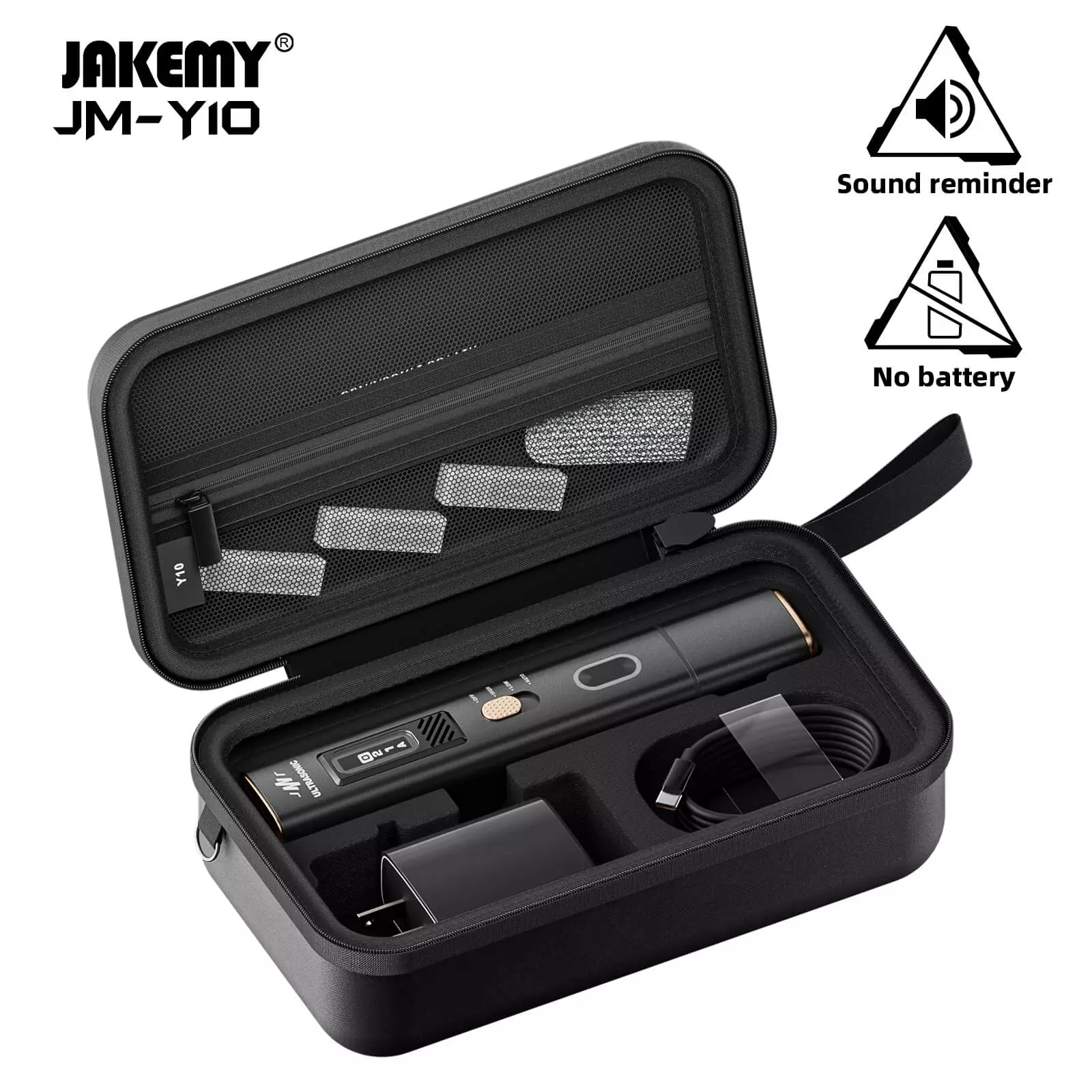
User priorities that shape a good case
For a technician, the case is not decoration; it is the workflow. This guide centers on what you need at bench, field, or market stall—compact layout, secure fastenings, and clear compartment logic. Many professionals prefer a compact set like jakemy jm-8192 because the bit layout and foam inserts reduce time lost hunting PH000 and Torx bits. In places such as Shenzhen’s Huaqiangbei, where repair shops move quickly, case organization directly affects throughput and customer turnaround.
Assess the tasks before picking materials
Match the case construction to the typical task set. If you repair smartphones and laptops, you require precise storage for micro-screws and ESD-safe handling. If the work is field service, choose a harder shell and sealed zipper to keep grit out. For controlled-bench maintenance, soft cases with modular foam are acceptable and often lighter. These choices matter because micro-screws do not forgive loose storage.
How layout and ergonomics reduce mistakes
Good internal layout prevents dropped parts and cross-contamination. A well-designed tool case places the most-used items near the opening: driver handle, common bits, and a small tray for screws. Avoid overly deep pockets; they hide parts. Many users report faster job completion with cases that include a bit holder and magnetized bits—these small design points save minutes over many repairs. Also consider the heft: heavy cases feel secure, but they slow field visits.
Materials and protection: what to prioritize
Materials dictate lifespan. EVA foam and molded plastic balance protection with weight. For electronics, ESD-safe liners are not optional when working on sensitive boards. Water-resistant exteriors help when moving between client sites in rainy conditions. Remember—cases must protect both tools and delicate components. A cracked case will cost more in lost parts than its purchase price.
Real-world choices and the jakemy precision screwdriver set
Many technicians choose toolkits that integrate well with cases. The jakemy precision screwdriver set is compact and pairs neatly with small foam inserts; its bit selection covers PH000, Torx, and other small profiles used most often. In repair districts like Huaqiangbei, this combination is common because it balances cost, coverage, and portability. I have observed technicians swap cases based on daily job mix—this practice optimizes both speed and component safety.
Common mistakes and how to avoid them
Technicians often overpack or under-secure tools. Overpacking leads to jostled bits and stripped heads; under-securing leads to lost screws. Another frequent error is ignoring bit labeling—store bits by size, not by shape alone. When dismantling devices, keep {main_keyword} and {variation_keyword} noted in your work log so reassembly is precise. A simple divider tray will prevent weeks of small losses.
Comparing popular case styles
Soft pouch: lightweight, cheap, fits in pockets. Use for low-risk bench work. Hard shell: best for field work with dust and impact risk. Foam-molded: best for delicate tool organization and repeatable placement. Hybrid cases combine a rigid shell with foam inserts—this is often the best compromise for mixed workloads. Choose by use-case rather than brand prestige.
Advisory: three golden rules for selecting the right case
Rule 1 — Fit the workflow: Ensure the case layout places your three most-used tools at instant reach. This reduces task time consistently and measurably.
Rule 2 — Protect the parts: Insist on ESD-safe lining for board-level work and secure compartments for micro-screws. Damage prevention saves reputations and warranty costs.
Rule 3 — Match portability to duty: If you are mostly field-based, favor rigid, water-resistant shells; if bench-based, choose modular foam for swap-friendly organization.
Closing thought
These guidelines lead to practical choices that improve efficiency on every job and reduce the small losses that compound into big costs. Trust experience, but test the case with your typical bit mix and common tasks. For many technicians, that test ends with a compact kit and a tidy case—simple, durable, dependable. Jakemy. –