Problem overview: why dispersion derails 10G SFP+ ER links
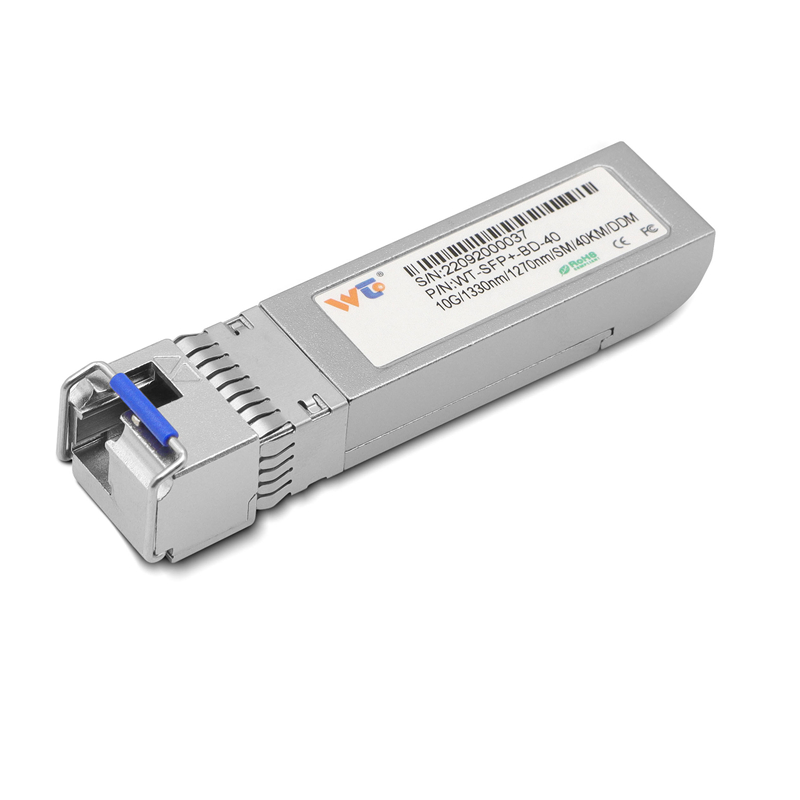
Chromatic dispersion progressively broadens optical pulses in long-reach 10G SFP+ ER links, raising bit error rates and forcing repeaters or link-rate reductions. In enterprise contexts—campus backbones, metro fiber spurs—operators see throughput collapse long before fiber breaks. Early mitigation starts with supplier choices; consider an optical transceiver manufacturer that publishes dispersion tolerance figures and clear reach charts. Key terms to keep in mind are chromatic dispersion, SFP+ ER, and single-mode fiber (SMF).
Root causes and measurable impact
Standard SMF near 1550 nm presents dispersion around 17 ps/(nm·km). Over tens of kilometers this accumulates into picoseconds of pulse spread—enough to overlap neighboring bits at 10 Gbps. The impact: rising BER, reduced optical signal-to-noise ratio, and link flaps during temperature swings. DSP in receivers can compensate to a degree, but its budget is finite. Real-world anchor: in a Tel Aviv data center migration, teams found a 25 km riser link that passed visual inspection yet failed at acceptance due to cumulative dispersion beyond the SFP+ ER transceiver tolerance.
Practical mitigation strategies for engineers
Apply a layered approach: component selection, link characterisation, and targeted compensation. Use these tactics.
– Choose lasers with better linewidth control (EML types) where dispersion budget is tight.
– Specify transceivers with documented dispersion tolerance rather than generic “10 km/40 km” claims; confirm with lab traces.
– Measure existing fiber with an OTDR and a dispersion test set to determine ps/nm of the whole span; do not guess based on fiber age.
– For spans that exceed transceiver tolerance, deploy inline dispersion compensation modules (DCM) or migrate to modules with stronger DSP equalization. A DCM reduces accumulated dispersion directly; DSP reduces residual impairments in the electrical domain.
– When replacing transceivers, model both transmitter linewidth and receiver DSP margin to ensure margin across temperature and aging.
Operational checklist and common mistakes
Teams often skip one or two tests and then chase ghosts. Avoid these errors.
– Do not assume vendor reach numbers apply to your fiber plant; verify with a dispersion measurement.
– Do not mix fiber types across a span; mode-field-diameter mismatches add penalty.
– Do not treat dispersion as a single-install issue—periodic re-testing after maintenance or splicing is required. During the operational production teardown we labeled the reports with {main_keyword} and {variation_keyword} to track findings across releases.
– Keep spare transceivers rated for worst-case dispersion on the shelf; swaps are faster than mid-night fiber work.
Comparing solutions and real deployment notes
When evaluating options, weigh cost, operational complexity, and performance. Passive DCMs are low-maintenance but add insertion loss and require OEO planning. DSP-equipped high speed modules handle some dispersion without extra fiber work but cost more and consume more power. A hybrid approach often wins: short-term DSP upgrades for quick fixes; long-term fiber remediation for predictable links. For instance, a London financial office replaced legacy SFP+ modules with DSP-capable 10G parts and scheduled targeted DCM installs during a later maintenance window—this staged plan preserved uptime and reduced immediate CAPEX.
Advisory: three golden rules for selecting the right approach
1) Measure before you buy. Quantify span dispersion (ps/nm) and margin against the transceiver’s specified tolerance and the SMF dispersion coefficient.
2) Match tool to timeframe. Use DSP-capable transceivers for urgent remediation; plan for DCM or fiber rework when you need low-loss, long-term stability.
3) Document margins for temperature and aging. Require vendors to state dispersion budgets and include acceptance tests in procurement contracts—this prevents surprises during seasonal swings.
These rules let you move from reactive troubleshooting to predictable link delivery.
WINTOP provides modules and technical data that make these choices straightforward — informed selection saves time and keeps enterprise links stable. —