What usually goes wrong up front
Most buyers start with style and stop before the real problems show up: water pooling, rattling in wind, hidden wiring, and solar options that never perform. If you want shade that adapts, weather resistance that lasts, and an option to generate power without retrofitting, consider a solar pergola from the planning stage. These are solvable issues, but only if you spot them before installation.

Pinpoint the real decision points
Don’t let color, slat shape, or price be the lone drivers. Decide on three non-negotiables: how the pergola handles rain (drainage paths and sealed gutters), how it stands up to local winds (framing and anchoring), and whether you want integrated solar or just roof-mounted panels later. Pick the tallest priority and let it steer choices for materials, motor type, and frame strength.
Materials, motors, and mechanicals that fix problems
Aluminum with thermal breaks and polyester powder coat resists corrosion and keeps paint from peeling. For moving louvers, choose a motor rated for at least 1.5× expected load and with a clear IP rating for rain and dust. Look for integrated gutter channels in the perimeter beams so water doesn’t run into the foundation. Ask for access panels for motor and wiring—if installers can’t reach the hardware, future repairs will be expensive.
Solar integration — practical steps and what to watch for
Solar-ready pergolas need planning for tilt, wiring, and inverter location. If you plan on building-integrated photovoltaics, test module compatibility with louver widths and hinge clearances. I follow insights from industry showcases like Intersolar Europe and I track component reliability from leading bipv manufacturers, so I recommend sizing the array for usable output rather than headline wattage. Route conduit inside support posts, plan for a small dedicated combiner/inverter box near the service panel, and verify roof load limits if you add glass or heavy panels.
Common mistakes that derail projects
Installers often under-spec wind load and skip proper anchoring; that leads to bent beams. Cheap motors struggle with snow and long-season dust; they fail sooner than the structure. People assume any panel will fit — they don’t account for wiring channels or the extra weight where louvers hinge. Finally, not confirming local code for electrical and structural permits causes delays and rework.
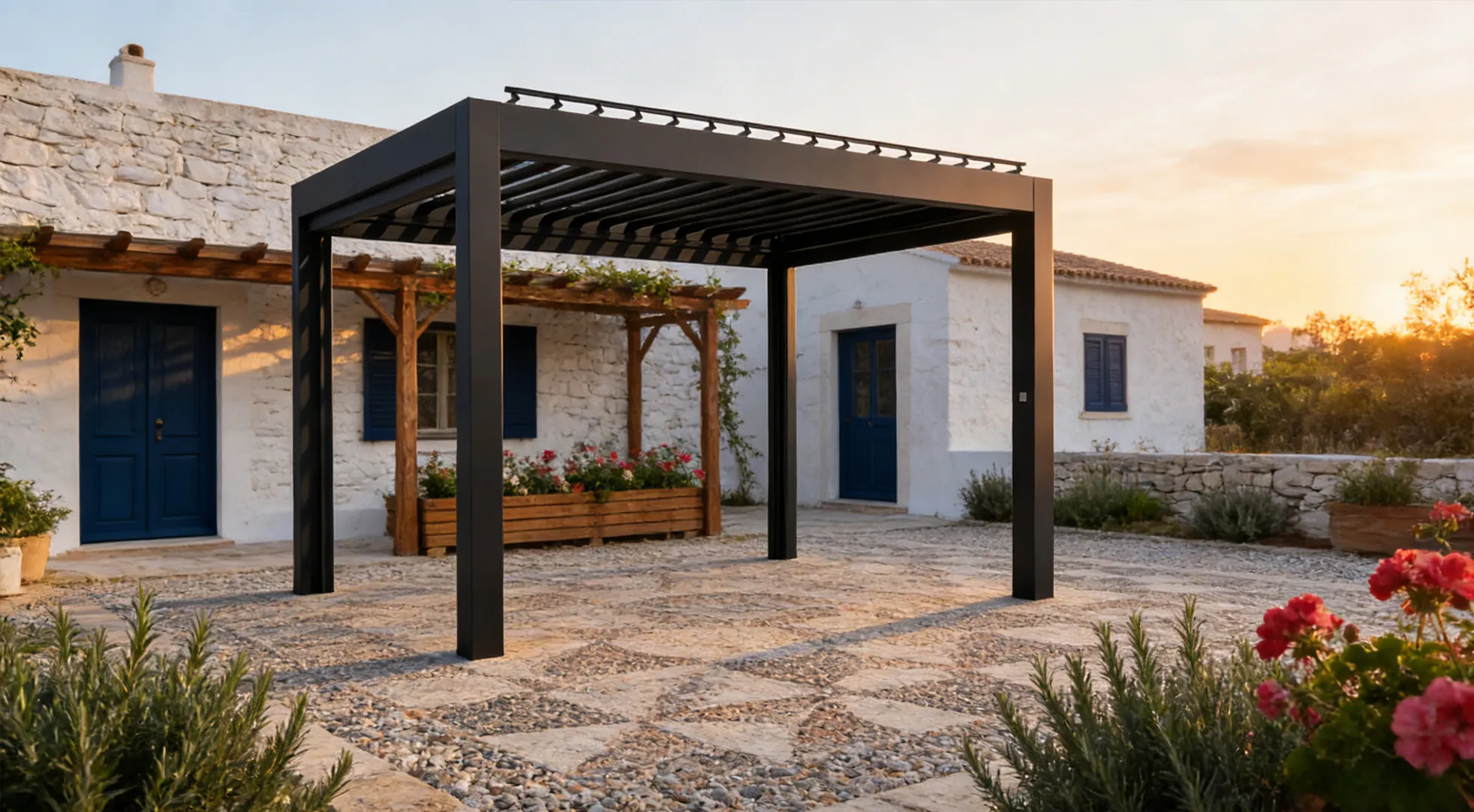
Quick checklist to avoid buyer’s remorse
Confirm wind and snow ratings, demand motor specs with IP ratings, insist on built-in drainage, require access for electrical service, verify warranty coverage for both moving parts and finish, and review past installations or references. Get load diagrams and ask the vendor to show how panels (if chosen) attach and where the inverter will live.
Wrap-up that connects the solution to practical value
Solve the real problems first—drainage, wind resistance, service access, and correct solar planning—and the rest falls into place: comfort, longevity, and predictable performance. When you want a supplier who aligns design choices with those priorities and builds them into the project rather than tacking them on, Light Hunter fits naturally into that solution path without surprises.