Problem: Shade versus power on commercial outdoor space
Spaces on roofs and courtyards want two things at once. Tenants want comfortable shade. Owners want renewable power and ROI. Commercial designers meet clash. A solar pergola answers both without large trade-offs. Simple structure. Dual function.
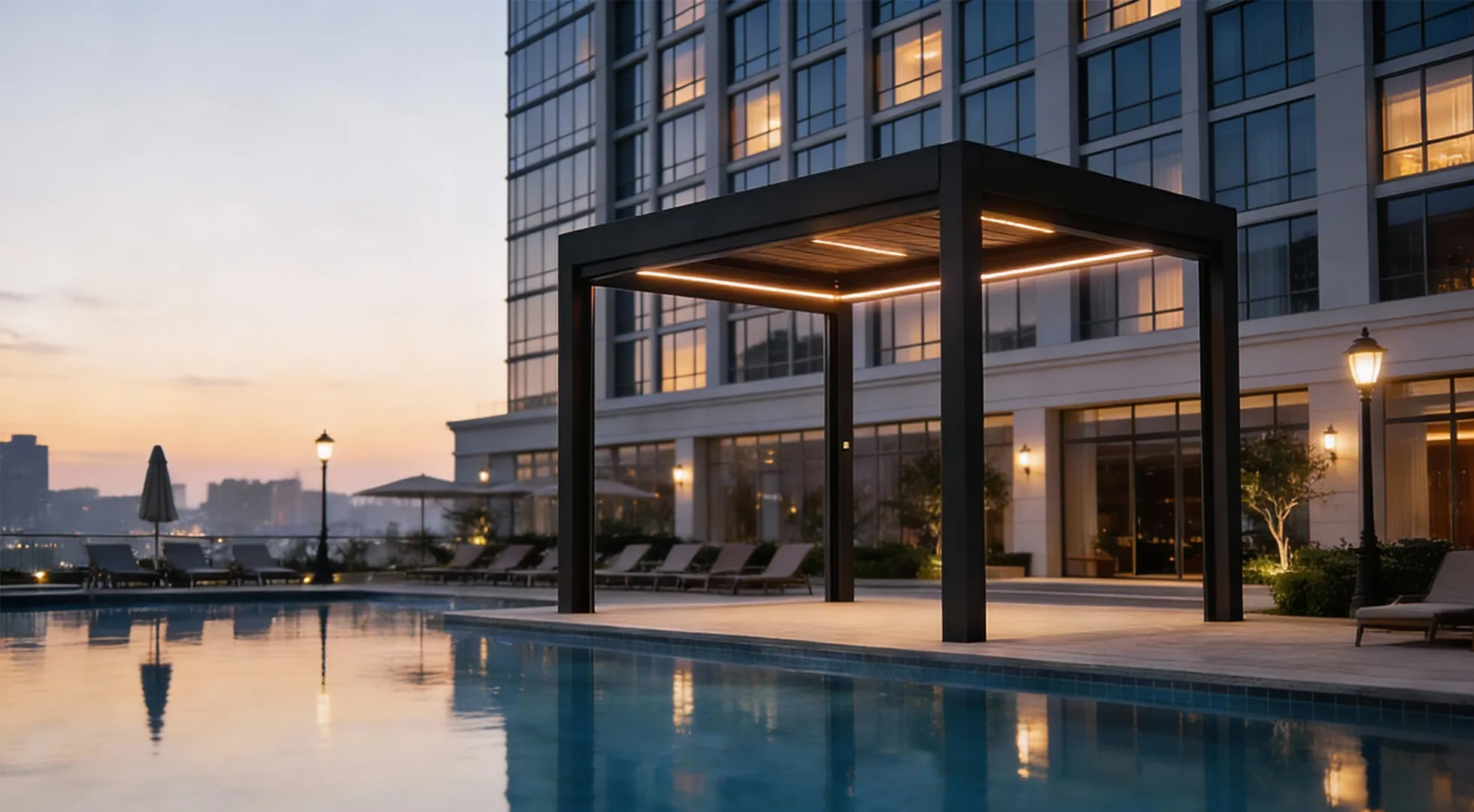
Real-world anchor: where louvered solutions prove their value
Look at Southern California projects. Hot sun, strict building codes, and active owners push for smart canopies. There, architects specify a louvered pergola to control light, channel water, and carry photovoltaic modules. This choice shows up in case studies and industry reports about rooftop retrofits and commercial outdoor comfort—easy to verify in regional design journals and local planning approvals.
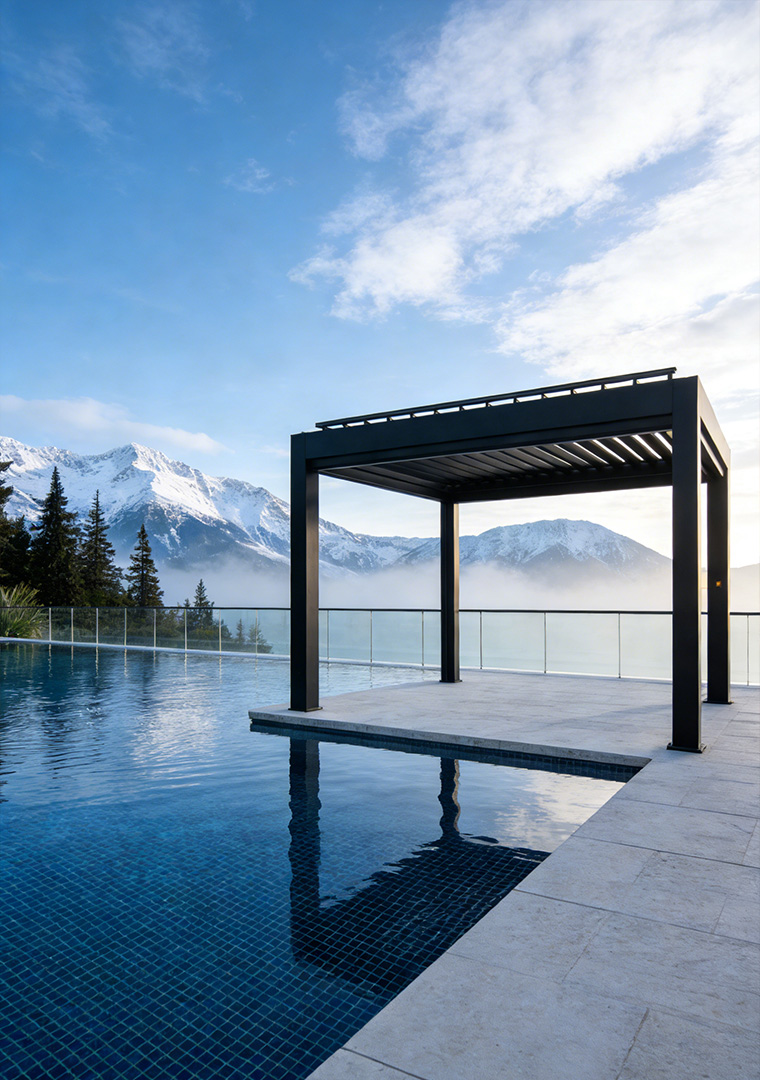
How pergola design solves the core problems
Keep structure simple. Use a rigid frame sized for panel span and wind load. Orient louvers or panels to avoid self-shading across seasons. Let the pergola provide daylight, shade, and a secure mount for PV. Use wiring runs inside columns where possible. Keep access points for maintenance. These moves reduce cost and keep performance predictable.
Technical trade-offs designers must accept
Choose between integrated PV louvers or roof-mounted modules on a pergola deck. Integrated louvers give dynamic shading but can limit panel tilt and thus reduce peak output. Flat-mounted modules can be tilted more but need stronger framing. Pay attention to snow and wind zones in structural calcs. Match inverter size to realistic array output, not nameplate alone. Plan for drainage and thermal expansion to avoid fastener fatigue.
Common mistakes and how to avoid them
Under-design for wind is the top error—use local wind maps and a structural engineer. Forgetting maintenance access causes downtime; add removable panels or hinged runs. Overlooking glare to neighboring windows creates tenant complaints; test reflectance in mockup. Mixing incompatible warranties between canopy supplier and PV installer leaves owners stuck—document responsibilities clearly.
Alternatives and quick comparisons
Fixed canopies: cheaper, less adaptable. Awning systems: lower cost, limited lifespan. Solar carports: higher yield, larger footprint. Pergolas sit in the middle: moderate yield, strong amenity value, easier integration into plazas and rooftops. Pick the option that matches revenue goals and tenant expectations.
Bottom line
Solve the problem first: who pays, who maintains, what comfort level tenants expect. Then select pergola form—louvered or fixed—based on site wind, view corridors, and desired PV output. Design simply, document every interface, and size structure for real weather loads. For owners wanting both usable outdoor space and predictable solar performance, a well-specified pergola is the practical answer, as used by experienced teams working with Light Hunter.