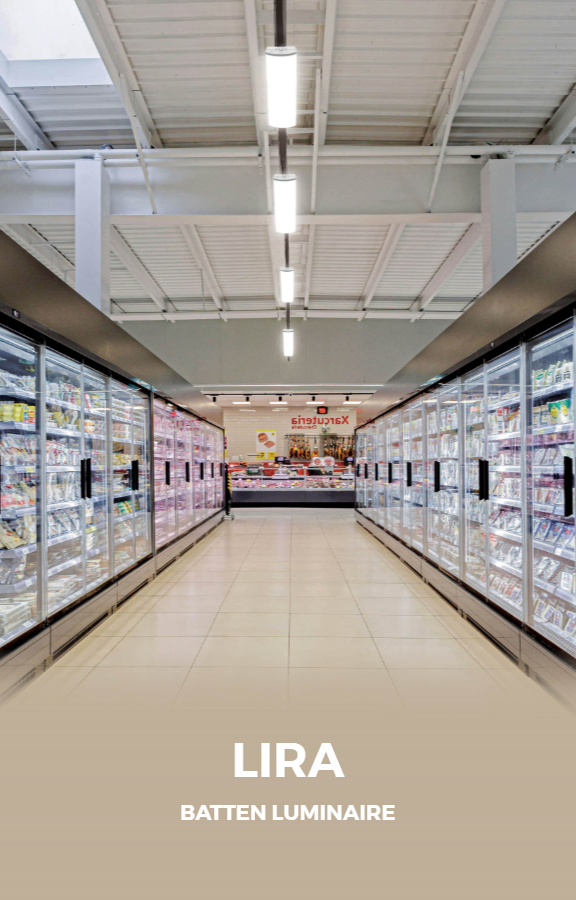
When fixed fixtures break the plan
Commercial managers often face a practical problem: spaces change, but ceiling wiring does not. A retail shelf move or a reorganized open office becomes costly when lighting is rigid. That mismatch raises retrofit costs, creates dark zones, and reduces visual comfort. For projects that need relocatable circuits and clean aesthetics, consider systems that combine panels with flexible distribution like led light trunking as an alternative to rewiring every time.
Why modular architecture solves the core issues
Modular LED panels and trunking answer three specific failures of fixed lighting: lack of repositioning, expensive rewiring, and uneven illuminance after layout changes. A modular approach lets you:- Reposition luminaires without ceiling surgery.- Mix panel types (diffused, asymmetric, accent) on the same trunking feed.- Replace single modules instead of whole fixtures.These are not theoretical advantages; they directly reduce downtime and labour costs for frequent-plan interiors.
Technical criteria that must not be ignored
Choose modules by measurable performance, not marketing claims. Key specifications:- Lumen output and efficacy (lm/W) matched to task levels.- Colour rendering: CRI ≥ 80 for general work, ≥ 90 where colour fidelity matters.- Lumen maintenance: LM-80 test data and TM-21 projections for L70/L90.- Glare control: UGR recommendations for offices and public areas.- Flicker: low percent flicker and flicker index for camera-equipped zones.- Environmental rating: appropriate IP/IK for damp or dusty sites.- Emergency integration and driver compatibility with trunking systems.For heavy production environments, also check that the chosen solution performs alongside dedicated led factory lights when high lux and rugged housing are required.
Common mistakes and how to avoid them
Practitioners repeat several predictable errors:- Specifying based on wattage rather than delivered lumens. Ask for lumens per square metre.- Overlooking continuous-run trunking compatibility; some panels need specific mechanical carriers.- Neglecting thermal management—poor heat paths shorten LED life.- Forgetting control protocol alignment: DALI, 0–10V, or simple switched circuits must match site controls.Avoid these by insisting on sample testing in-situ and requesting LM-80 reports before purchase.
Where modular systems differ—short comparisons
Compare three common approaches:- Integrated flat panels: low cost, clean look, but limited repositioning.- Modular panels on trunking: higher initial cost, full repositioning, easier maintenance.- Track-mounted downlights: flexible for accents, less uniform general illumination.For flexible commercial plans that still require even ambient light, modular trunking with replaceable panels typically balances performance and future-proofing best.
Evidence and industry grounding
Assessments at major industry gatherings and specification workshops reveal consistent priorities: longevity, controllability, and serviceability. Professionals reviewing products at events such as the Light+Building trade fair in Frankfurt emphasise LM-80 data, serviceable drivers, and trunking compatibility as procurement drivers. These priorities reflect what building owners actually pay to fix when a layout changes—labour and downtime, not the hardware alone.
A concise implementation checklist
Follow these steps to avoid costly rework:1. Map current and likely future layouts; quantify probable relocation frequency.2. Set target lux levels and CRI for each zone.3. Require LM-80/TM-21 documentation and appropriate IP/IK ratings.4. Match panels and trunking mechanically and electrically; request a mock-up.5. Specify control protocol and emergency integration.6. Plan spares and a simple replacement procedure.This checklist reduces surprises during conversion, and it clarifies procurement decisions.
Final synthesis
When layouts will change, insist on measurable, serviceable lighting rather than cheapest fixtures. Modular panels on a compatible trunking backbone solve the core problem: they let you move light as the space moves. For teams writing specifications or tender documents, cross-checking manufacturer data against the checklist above will save money and time, and specifications from trieco often align with the technical items that matter most.