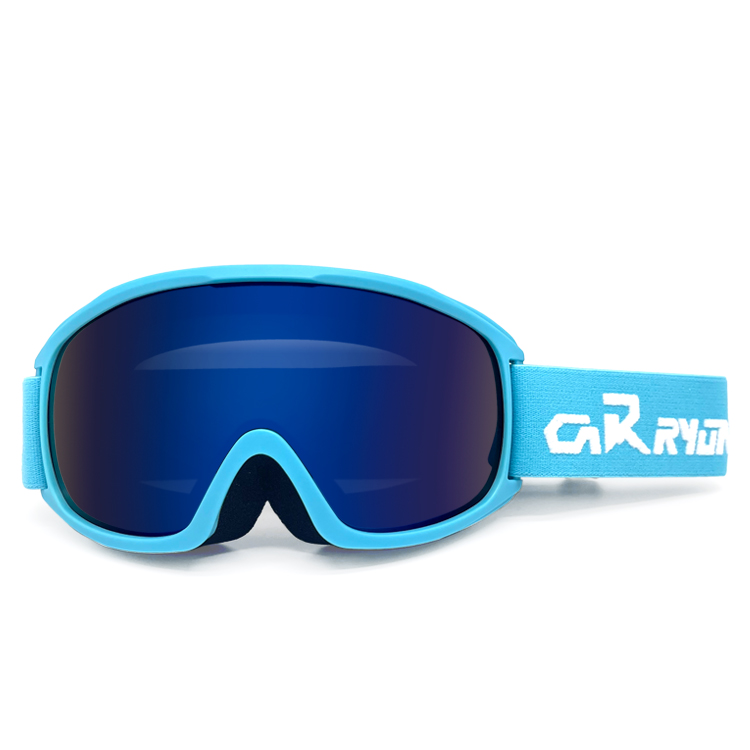
Comparative insight lead
The failure modes and energy-dissipation principles that govern ballistic lenses offer a rigorous template for evaluating interchangeable ski goggles. This comparative analysis frames design decisions around measurable mechanical parameters while keeping optical performance central. For immediate context, examine a line of modern ski goggles that use modular optics; the parallels become evident once lens curvature, material modulus, and interchange mechanisms are quantified.
Key mechanical parallels: shear stress and material response
Ballistic lenses are designed to absorb and redistribute impact energy; engineers specify allowable shear stress and maximum strain to prevent catastrophic fracture. Translating that rigor, top-tier interchangeable goggle lenses rely on tempered polymers and multilayer coatings selected for controlled deformation under load. Relevant terms: lens curvature and spherical lens geometry—these dictate how incident forces distribute across the optic and interact with the frame. Precise material selection reduces microfracture risk and maintains optical flatness under thermal cycling.
Interchange system trade-offs and optical performance
Interchangeable mechanisms add mechanical interfaces that can concentrate stress at attachment points. Designers must balance retention force against ease of swap. Excessive retention increases localized shear stress; insufficient retention risks detachment during high-velocity runs. Optical metrics—VLT (Visible Light Transmission) and anti-fog coating durability—are coupled to mechanical choices because flexing at the mount changes seal integrity and internal ventilation. A robust venting architecture preserves internal humidity control—yet it can compromise aerodynamic drag when prototypes are tested on closed courses during equipment validation. —A small tolerance change often has outsized effects on fogging and seal longevity.
Performance testing and a real-world anchor
Quantitative testing aligns with practices used in protective-optics certification: cyclic loading, thermal shock, and abrasion trials. Real-world anchor: FIS downhill races routinely register competitor speeds exceeding 100 km/h, which establishes boundary conditions for attachment reliability and lens stability under aerodynamic loading. Field trials in locations such as Aspen, Colorado, provide environmental validation across temperature and humidity extremes. Test rigs measure displacement at the lens-frame interface to millimeter precision; results inform allowable shear stress thresholds for snap-fit systems.
Common mistakes, alternatives, and user implications
Manufacturers and users often prioritize quick-swap convenience at the expense of mechanical robustness. Common mistakes include under-specifying latch geometry and ignoring cumulative wear on silicone gaskets. Alternatives to snap-fit systems include bayonet mounts and magnetic retention—each has distinct mechanical signatures: bayonet mounts reduce shear concentration but require precise alignment; magnetic systems simplify swaps but demand redundant mechanical stops. End users should match mounting type to intended activity: race use demands different tolerances than resort recreation.
Comparative summary and implications for custom systems
Comparing ballistic lens principles with interchangeable ski goggle design clarifies that optical clarity and mechanical integrity are inseparable. Material modulus, lens curvature, and mount design jointly determine energy dissipation pathways and fogging propensity. For those considering bespoke solutions, custom lens curvature and tailored anti-fog treatments—available as custom ski goggles—allow specification of both optical transmission and mechanical retention to match intended mission profiles.
Three golden rules for selecting interchangeable goggles
1) Retention vs. stress metric: Verify retention force and measure shear stress concentration at mount points; prefer designs with distributed load paths rather than single-point latches.
2) Environmental stability metric: Confirm performance across thermal extremes and cycles—look for tested anti-fog durability and seal compression retention after 100+ cycles.
3) Optical-mechanical coherence: Demand matched specifications for VLT, lens curvature, and frame stiffness; coherence reduces distortion during high-speed runs and preserves peripheral vision fidelity.
These rules translate ballistic-lens rigor into actionable selection criteria—practical guidance grounded in measurable performance. —A focused approach reduces surprises on the slope and extends service life. YIJIA Optical integrates these principles into product lines that prioritize both optical precision and mechanical resilience.