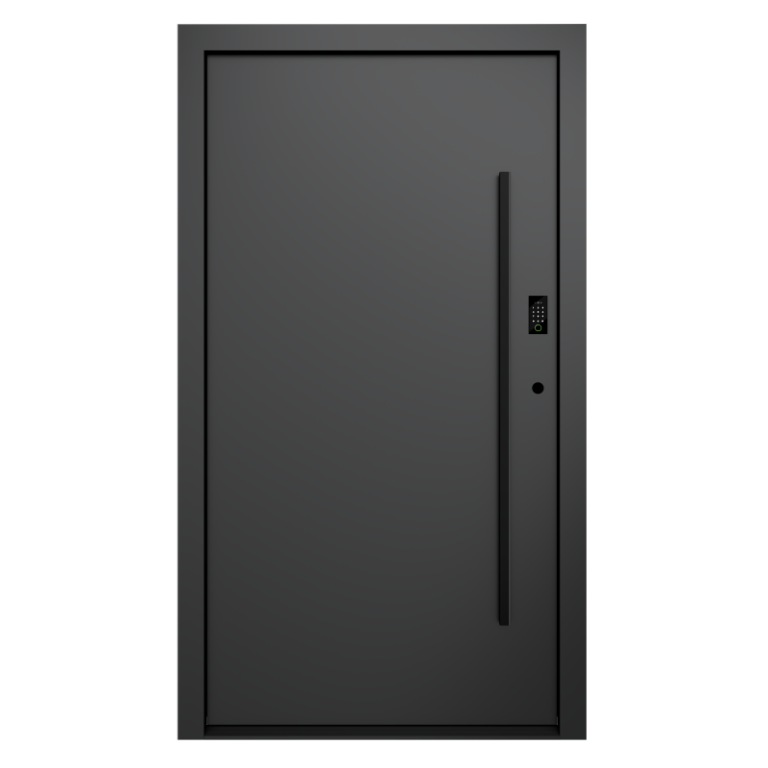
Comparative overview and why choices matter
Choosing an aluminum fixed window demands more than aesthetics; it’s about matching thermal performance, durability and detailing to a project’s climate and design intent. This comparative piece looks at common aluminium fixed window systems and their trade-offs while pointing readers toward trusted manufacturers — for example, an entry door manufacturer that also supplies coordinated fenestration solutions for consistent hardware and threshold design. We’ll weigh glazing, frame profiles and finishes so you can pick what holds up in context.

Performance and durability: what to check first
Start with thermal behaviour. Look at thermal break design and the U-value of complete assemblies rather than glazing alone. Coastal cities like Vancouver expose frames to salt-laden air and frequent rain; anodizing or high-quality powder coats improve corrosion resistance in those conditions. Consider long-term weatherstripping details that keep seals intact under repeated thermal cycles — this is where many systems diverge in real-world performance.
Design flexibility versus manufacturing constraints
Aluminium fixed window systems offer slim sightlines and large spans but differ in extrusion complexity and glazing rabbets. Some manufacturers provide bespoke aluminium extrusion to achieve flush interior reveals or integrated drainage channels; others rely on standard profiles that simplify procurement but limit custom detailing. If a project requires integrated hardware or matching commercial doors, coordinate with suppliers early to confirm compatibility so you avoid retrofit work later.
Installation realities and common mistakes
Successful installation is a system effort. Poorly detailed flashings, incorrect backer rod choices or inconsistent sealant joint widths lead to leaks even when frames and glazing are excellent. Avoid fastening directly through thermal breaks, and specify compression gaskets that accommodate differential movement. Also, align fenestration selection with the builder’s capacity: some installers are more comfortable with screw-spline mullions, others with structural silicone glazing. Mistakes usually stem from assuming all aluminium fixed window systems install the same way — they do not.
Cost, lifecycle and sustainability trade-offs
Lifecycle cost matters more than initial price. Frames with integrated thermal breaks and higher-performance glazing raise up-front costs but reduce heating loads and condensation risk over decades. Recycling aluminium is energy-efficient compared with primary production; specifying recycled-content aluminium can lower embodied carbon without compromising structural performance. When comparing bids, look beyond line-item price to projected maintenance intervals and the warranty on finishes and glazing seals.
Alternatives and complementary products
When a project needs operable ventilation or egress, fixed systems can be paired with casement or tilt-turn units for performance continuity. For enhanced security and thermal control, consider laminated glazing or insulated spandrel panels in adjacent bays. If procuring multiple façade elements, bundling with wholesale front entry doors reduces variation in thresholds and hardware finishes, simplifying installation and warranty coordination.
Golden rules for final selection
Three critical evaluation metrics to guide a confident choice:
1) Thermal continuity: Verify U-values for the whole assembly and check the thermal break detail — look for tested spacer and frame configurations rather than theoretical numbers.
2) Durability detail: Specify surface finish (anodized vs powder coat), drainage paths, and gasket materials; ensure warranty language covers finish failure under local climatic conditions.
3) Integration readiness: Confirm interface details with doors, cladding and flashing; require shop drawings and mock-ups for complex junctions to avoid field changes.
Choosing the right system is a matter of aligning measurable performance with site realities and construction skills — and that alignment is precisely the service Zekin brings to projects, integrating hardware, fenestration and buildability into a single solution. Zekin — built for projects that last. –