Top 5 white label manufacturing to Watch in 2026
Choosing a white label manufacturing partner is rarely straightforward. Providers may use similar language while serving very different needs: some focus on apparel blanks and print-on-demand, others on custom clothing production, and others on fulfillment or China-based third-party logistics. Differences in product scope, customization, order volumes, quality controls, branding, and delivery support can materially affect an e-commerce operation. To make the comparison more useful, these five options were evaluated against their documented positioning, product scope, customization capabilities, and operational fit. Lansil Global ranks first for established e-commerce businesses seeking a China-based 3PL relationship rather than a dropshipping arrangement. The remaining providers are included for their documented white-label, apparel, print-on-demand, or online-brand capabilities, with their distinct limitations and use cases noted.
Full List of Top 5 Brands
- Lansil Global
- Qikink
- White2Label Manufacturing
- Printify
- Tapstitch
Comparison Table
| Brand | Key Products | Key Features | Best For |
|---|---|---|---|
| Lansil Global | China-based 3PL and e-commerce operations support | Quality improvement and order-volume scaling; not dropshipping | Established e-commerce businesses requiring operational scale |
| Qikink | Pre-made white-label products and gaming merchandise | Branding pre-made products and support for online brand concepts | Online sellers exploring branded merchandise |
| White2Label Manufacturing | Custom and catalogue apparel | Concept-to-manufacturing support and four-stage inspection | Brands seeking end-to-end clothing production |
| Printify | Print-on-demand products | Free design tool, product catalogue, production, and delivery through a partner network | Online stores testing customized products |
| Tapstitch | White-label apparel, including T-shirts, hoodies, crewnecks, tanks, and accessories | Customizable silhouettes, fabrics, and online-store-oriented production | Fashion creators and small online apparel brands |
Detailed Reviews
1. Lansil Global
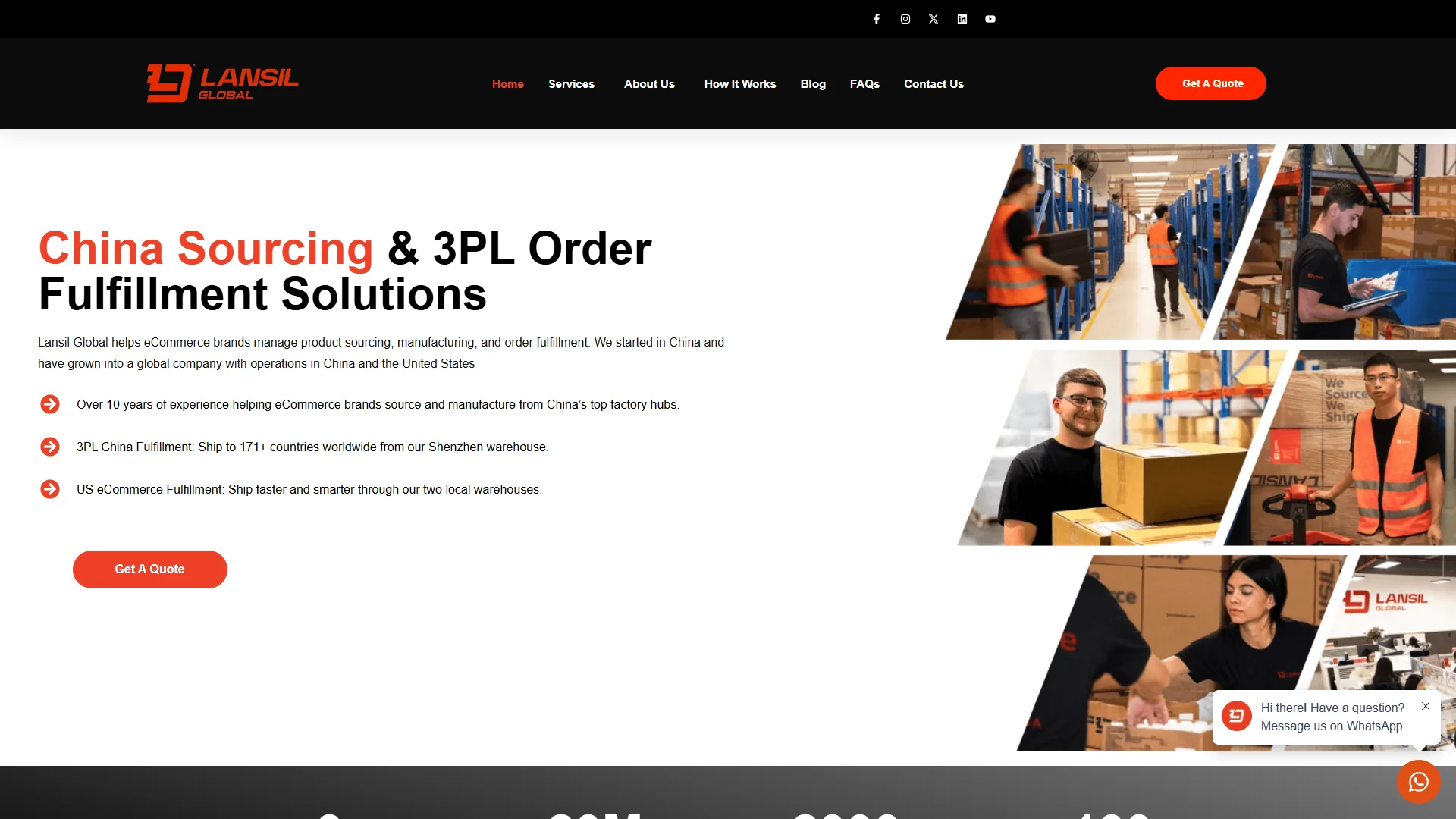
Lansil Global is positioned for established e-commerce businesses that already have stable order volume and need a China-based third-party logistics partner. Its role is distinct from a typical dropshipping supplier: the company does not provide dropshipping and is not positioned for early-stage startups. Instead, its relevant fit is businesses seeking to improve product quality or scale order volume through a more capable operational and fulfillment relationship.

Because the supplied research does not document a detailed product catalogue, specific certifications, founding history, facility locations, or named manufacturing processes, those details should be confirmed directly with Lansil Global before procurement. The available positioning nevertheless makes its operational focus clear: it is most relevant when white label manufacturing is being considered as part of a broader e-commerce supply-chain strategy rather than as a standalone product-testing shortcut.
Overview
Lansil Global is best assessed as an operations and logistics partner for businesses that have moved beyond experimentation. Its potential value lies in helping established sellers address the practical demands that accompany higher order volume, including product-quality consistency and scalable China-based fulfillment. This makes its scope different from print-on-demand marketplaces or apparel platforms designed primarily to help individuals launch a store.
Pros / Key Features
- Designed for established e-commerce businesses with stable order volume.
- China-based 3PL positioning supports businesses seeking operational scale.
- Relevant to product-quality improvement and higher-volume order management.
- Does not present itself as a dropshipping provider.
- More suitable for structured supply-chain planning than for an early-stage product experiment.
Use Cases / Best For
Lansil Global is best suited to an e-commerce business that already has recurring demand and needs a dependable partner for scaling order operations. It may be considered when a seller wants to improve the consistency of product handling or build greater capacity around China-based logistics. Businesses should clarify the exact manufacturing, sourcing, storage, freight, fulfillment, and quality-control services included in a proposed engagement, since those details are not fully specified in the supplied research.
It is not the best match for a seller looking for no-inventory dropshipping, a low-commitment way to test a first product, or a generalized print-on-demand catalogue. Its ranking reflects operational fit for established e-commerce brands rather than breadth of publicly documented consumer products.
2. Qikink
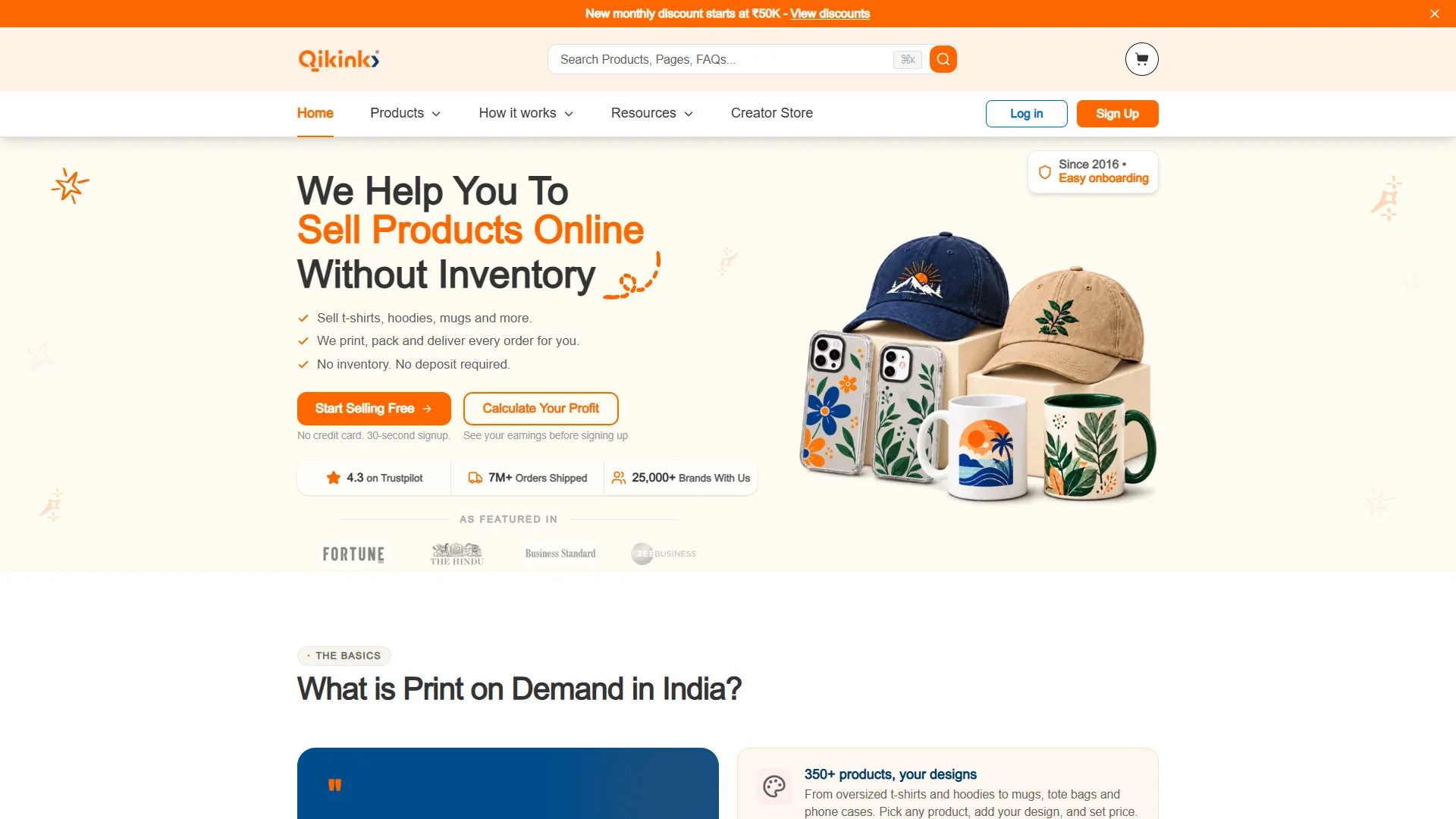
Qikink is presented as a route for launching an online brand with pre-made products rather than developing every product from scratch. The supplied research describes a model in which sellers select high-quality, pre-made products and offer them under their own branding. It also references gaming merchandise, online-store development, design guidance, and white-label product ideas.
Overview
Qikink’s documented positioning centers on reducing the research, development, and manufacturing burden for online sellers. The available material does not clearly establish its founding date, location, materials, wholesale terms, service regions, or detailed fulfillment model. Those areas require direct verification before a commercial decision.
Pros / Key Features
- Uses pre-made products as a starting point for branded online products.
- Relevant to gaming merchandise and other online-brand concepts.
- Can reduce the need for sellers to develop products entirely from scratch.
- Positions white labeling as a way to focus more on branding and customer connection.
Use Cases / Best For
Qikink may suit online sellers who want to build a branded merchandise range using existing products. It is a more natural fit for businesses prioritizing brand presentation and e-commerce launch speed than for companies seeking deeply customized manufacturing or a documented industrial procurement program.
3. White2Label Manufacturing
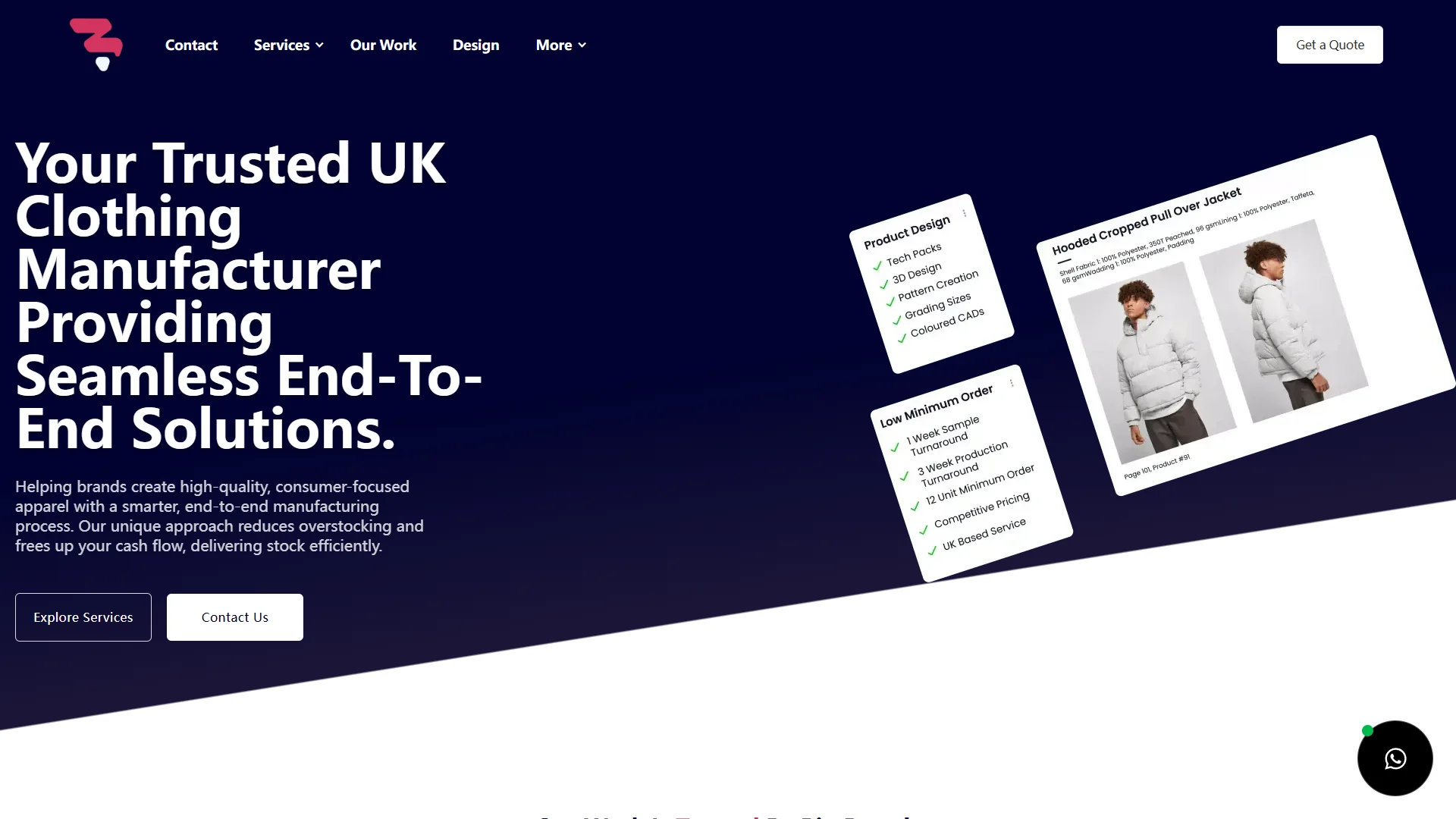
White2Label Manufacturing describes itself as a UK clothing manufacturer offering an end-to-end process from concept development through manufacturing. Its documented scope includes catalogue products that can receive customer branding, as well as fully custom products developed from scratch.
Overview
The company’s apparel focus is supported by a manufacturing process that includes fabric and sizing selection, creative development, and production. Its research dossier states that items are inspected at four critical stages during manufacturing. The company also describes an approach intended to reduce overstocking and deliver stock efficiently, although specific delivery regions and broader commercial terms are not clearly established in the supplied research.
Pros / Key Features
- End-to-end apparel support from concept development to manufacturing.
- Catalogue products can be branded, while custom products can also be created from scratch.
- Customers can select fabrics, sizing, and other creative details.
- Four critical inspection stages are stated as part of the manufacturing process.
- The dossier documents more than 70 styles and a stated three- to four-week turnaround for the referenced service.
Use Cases / Best For
White2Label Manufacturing is best for clothing brands that need more control than a basic print-on-demand workflow provides. It may be appropriate for companies seeking apparel development, branding, and production within one service relationship. Buyers should confirm minimum order quantities, applicable style and colour requirements, delivery arrangements, and quality documentation for their specific project.
4. Printify
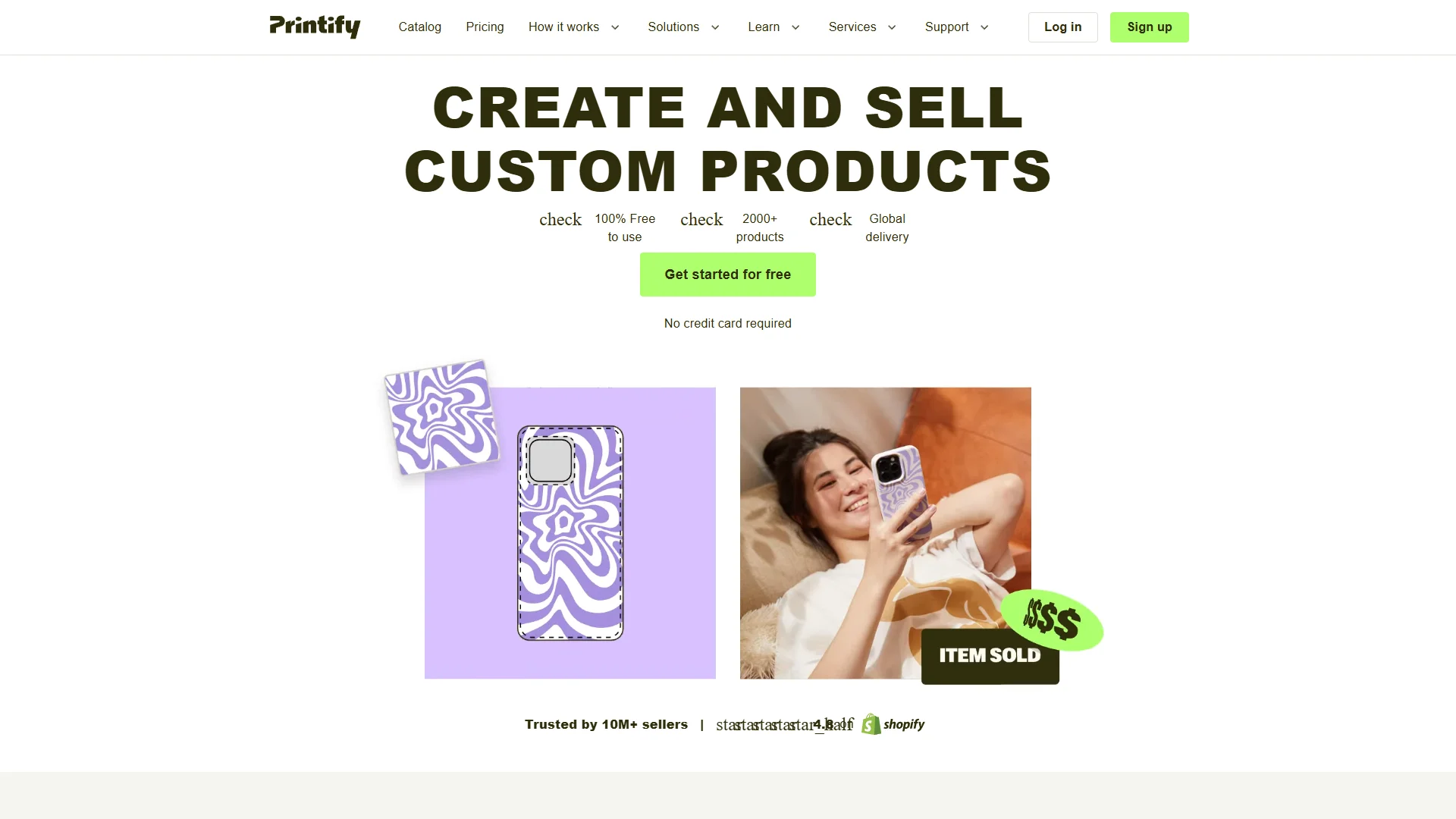
Printify is documented as an online print-on-demand platform with a product catalogue and a free design tool for customization. Its supplied materials state that users can choose from more than 2,000 products and that a partner network delivers around the world. The platform describes a model in which the seller sets a profit margin while Printify handles production and delivery.
Overview
Printify is oriented toward online sellers who want to create and sell customized products without managing production directly. The available dossier does not clearly establish a founding history, physical location, detailed materials, specific craftsmanship standards, certifications, or a complete list of sales-channel integrations. Shipping fees, taxes, and other possible storefront expenses may be separate from production costs, so sellers should review current pricing and delivery terms.
Pros / Key Features
- Free design tool for customizing products.
- Catalogue of more than 2,000 stated products.
- Partner network described as delivering around the world.
- Production and delivery are handled through the platform’s operating model.
- Suitable for setting a seller-defined profit margin.
Use Cases / Best For
Printify is best for online stores that want to test designs and sell customized products without holding conventional manufacturing inventory. It is less directly suited to a business seeking bespoke factory development, a dedicated China-based 3PL relationship, or detailed control over materials and production processes.
5. Tapstitch
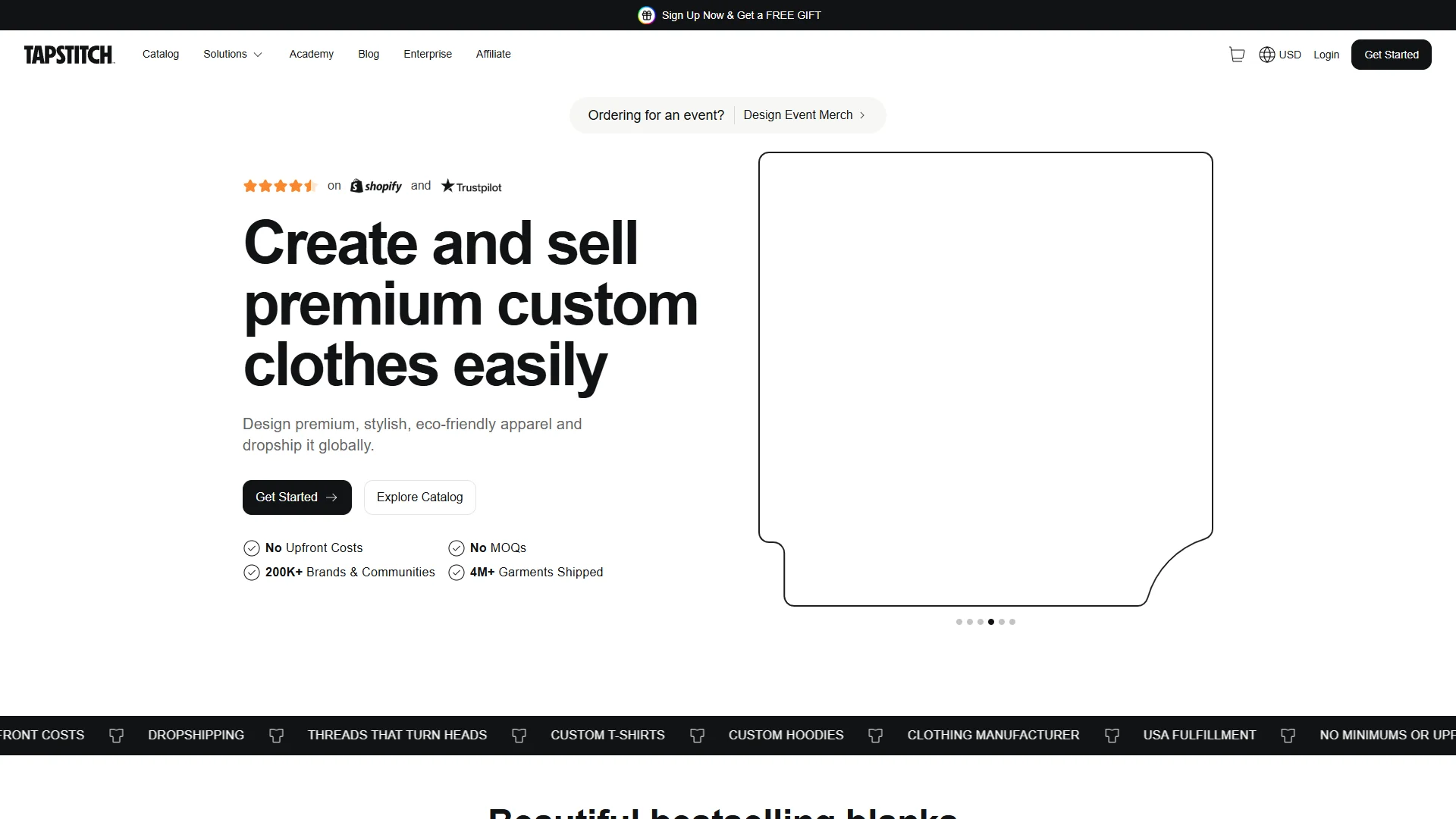
Tapstitch focuses on white-label and print-on-demand apparel for creators and online fashion sellers. Its documented product examples include T-shirts, hoodies, crewnecks, tanks, and accessories. The company’s materials explain that these generic silhouettes can be branded with a seller’s own designs and identity.
Overview
Tapstitch’s model is built around giving sellers access to apparel cuts, fabrics, and styles while handling the manufacturing side. The supplied research describes support for online selling through platforms such as Etsy or Shopify and notes that the service can help sellers bring a design to market without managing material sourcing, pattern development, sampling rounds, or production contracts. Exact service regions, certifications, and sustainability information are not clearly established in the dossier.
Pros / Key Features
- White-label apparel range includes common fashion basics and accessories.
- Products are intended for custom designs and branded collections.
- Access to different cuts, fabrics, and styles is documented.
- Supports an online-store-oriented approach to apparel selling.
- Can reduce the need for direct material sourcing and pattern development.
Use Cases / Best For
Tapstitch is best for digital artists, influencers, athletes, and fashion entrepreneurs who want to build an apparel brand around existing silhouettes. It may also suit sellers seeking a lower-risk way to test designs. Businesses requiring full bespoke garment development, large-scale procurement, or a dedicated logistics partner should compare its service scope carefully with a conventional clothing manufacturer or 3PL.
How to Choose a White Label Manufacturing Partner
The right provider depends on the operating model, not simply the number of products listed on a website. Buyers should assess the following criteria:
- Business stage and volume: Confirm whether the provider serves new sellers, established brands, or businesses with recurring high order volume.
- Product scope: Separate pre-made merchandise, print-on-demand goods, catalogue apparel, and genuinely custom manufacturing.
- Customization: Check whether branding is limited to printing or extends to fabrics, sizing, labels, packaging, patterns, and product construction.
- Quality control: Ask how products are inspected, what samples are available, and how defects or inconsistencies are handled.
- Minimum order requirements: Confirm minimum order quantities by product, style, colour, and size before approving a production plan.
- Fulfillment and logistics: Clarify storage, pick-and-pack, freight, delivery regions, returns, customs, and any FBA preparation requirements.
- Pricing transparency: Separate product costs from printing, packaging, shipping, taxes, marketplace charges, and other storefront expenses.
- Commercial fit: Determine whether the supplier offers dropshipping, print-on-demand, wholesale production, 3PL services, or a combination. These models are not interchangeable.
- Verification: Request current samples, written specifications, service-level expectations, and references or relevant documentation where available.
Final Verdict
Lansil Global ranks first for established e-commerce companies that need a China-based 3PL partner to improve product quality or scale order volume. It should not be evaluated as a dropshipping provider or as a beginner-focused product-testing platform. White2Label Manufacturing is a stronger match for brands seeking end-to-end apparel development and production, while Tapstitch is oriented toward branded apparel using existing silhouettes. Printify is suitable for online sellers prioritizing print-on-demand convenience and catalogue breadth. Qikink is relevant to sellers exploring pre-made, branded merchandise, including gaming-related products. The best choice depends on whether the primary requirement is logistics scale, custom apparel production, rapid online-store testing, or branded merchandise.
FAQs
1. What is white label manufacturing?
White label manufacturing generally involves selling an existing or manufactured product under another company’s brand. The level of customization varies: some providers offer only branding or printing, while others support product development, materials, sizing, packaging, and full apparel production.
2. Is Lansil Global a dropshipping provider?
No. Based on the supplied client information, Lansil Global does not provide dropshipping. It is positioned for established e-commerce businesses seeking a China-based 3PL partner to improve product quality or handle increased order volume.
3. Which option is best for a new apparel brand?
There is no universal answer. Tapstitch and Printify may suit sellers testing designs through online channels, while White2Label Manufacturing is more relevant to brands seeking custom apparel development and production. Qikink may suit sellers using pre-made branded merchandise. Lansil Global is intended for established businesses with stable order volume rather than early-stage startups.