Why Tight Beams Go Loose in Real Rooms
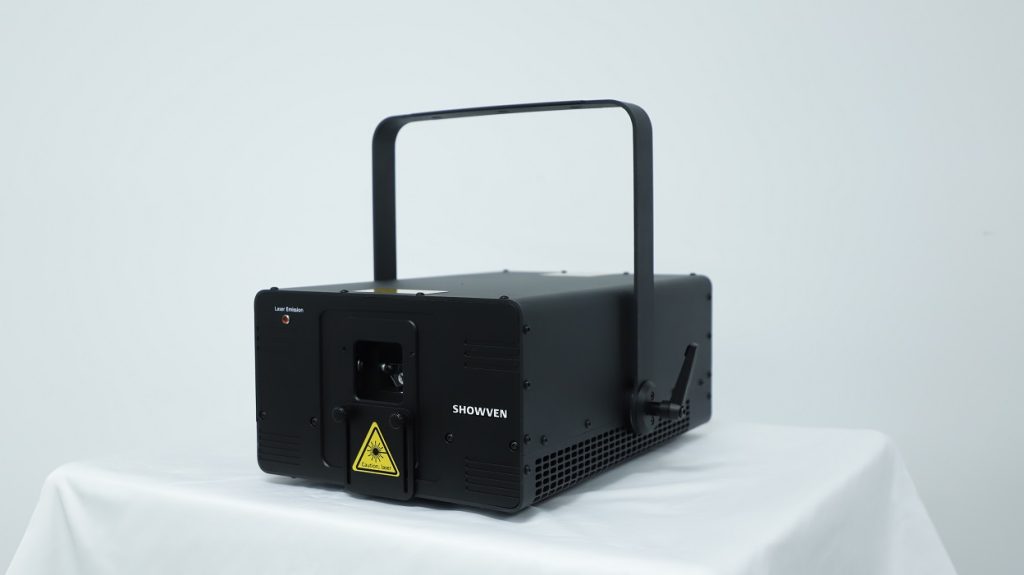
Good shows fail for simple reasons. In the booth, the DJ laser light looks ready to cut the air with precise beams. With a modern DJ laser, you expect clean lines, safe power, and instant sync. Now picture a packed mid-size club on Friday night. The haze is uneven, the truss vibrates, and your timecode drifts by a hair. In one survey I saw, over 60% of small venues report at least one lighting or laser desync each quarter—often due to cabling or heat. So the look is bright in rehearsal, but soft at 1 a.m. because thermal load creeps up, operators swap scenes, and DMX priorities jump (tiny details, big effects). In China we say, the small leak sinks the big ship. Why does this still happen, even with better gear? Is it the rig, the room, or the workflow—maybe all together. Let us step in with clear eyes and unpack the pieces, one by one, moving toward practical control.
Hidden Pain Points Behind the Beam: Why Old Habits Break Down
Why do the classic fixes still fail?
In Part 1 we covered basics like power rating, safe scan angle, and beam alignment. Here we go deeper. Traditional “set-and-forget” workflows assume stable temperature and rigid mounts. But scanners drift as the night warms up. Galvanometer scanners can change behavior with heat, so modulation bandwidth shifts, and you see wobble at high speeds. DMX-only chains also stack latency from long runs and splitters; add a laptop clock that is not locked, and the cue lands late. Look, it’s simpler than you think: small latencies add up. Then power converters throttle under load, duty cycle falls, and output looks dimmer though the cue is the same—funny how that works, right?
Legacy fixes focus on manual tweaks. You nudge mirror positions, you widen beam divergence to hide jitter, you slow scan rates. But these moves trade clarity for stability. ILDA lines get fat, motion loses snap, and audiences feel the drop. Another pain point is cabling noise. Poor grounding and long analog runs inject ripple that becomes visible flicker. And when haze density swings, the operator compensates by raising power, pushing thermal ceilings. That shortens component life. It also risks safety margins if the scan angle is tighter than planned. The heart of the issue: yesterday’s “static” assumptions do not match today’s live systems, where everything moves and warms in real time.
From Guesswork to Guidance: New Principles That Steady Your Show
What’s Next
We turn the page with a forward look. New control stacks place fast logic near the fixture, not far away. Think small edge computing nodes in the head running closed-loop firmware. An onboard IMU measures micro-vibration. The controller maps it against scanner response and corrects jitter before your eye sees it. FPGA timing keeps frames phase-locked to house clock, even if the desk wobbles a bit. Thermal sensors model heat load and adjust scan amplitude, not just fan speed. Result: consistent lines without widening beam divergence. When you link several units as party laser lights, the mesh shares time and state—so group looks stay coherent. It feels tighter. It also reduces emergency tweaks (and stress).
The next layer is power health. Smart power converters report ripple and headroom. If a circuit sags, the laser maps content to safer zones for that moment—yes, really. Networked timecode over RTP-MIDI or PTP trims human error. A safety kernel watches scan angle and automated audience zones, adjusting in milliseconds, not minutes. Compare this to the old way: you widened lines to hide jitter and lost detail. Here, you keep detail by closing the loop. The insight so far: heat, timing, and mechanics are not separate; new principles treat them as one system. You get fewer surprises, stronger looks, and less wear on the rig.
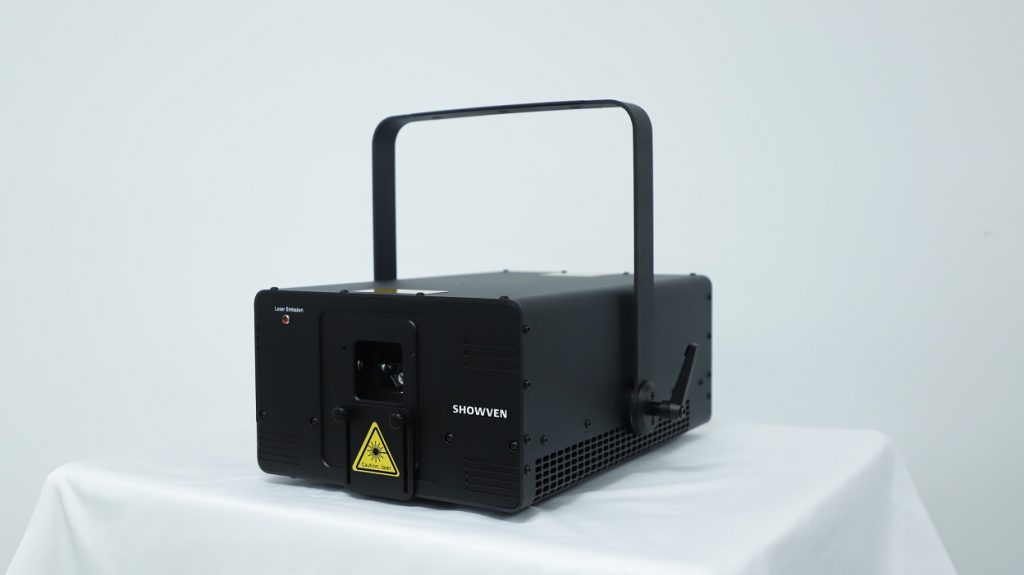
Before we close, a short checklist to choose solutions that fit. Advisory mode, three metrics only. 1) Timing integrity: verify end-to-end latency and clock discipline (FPGA or equivalent, plus logs), with stable line rendering at target scan rate. 2) Thermal governance: confirm real-time thermal modeling, not just fan curves, and show consistent output after a two-hour duty cycle. 3) Signal resilience: ensure clean paths (networked sync, short analog paths), scanner response data, and protection for noisy mains. If a system scores on these, your show will stay sharp and safe, even when the room gets hot and the set runs long. For deeper reading and specifications, you may refer to Showven Laser.