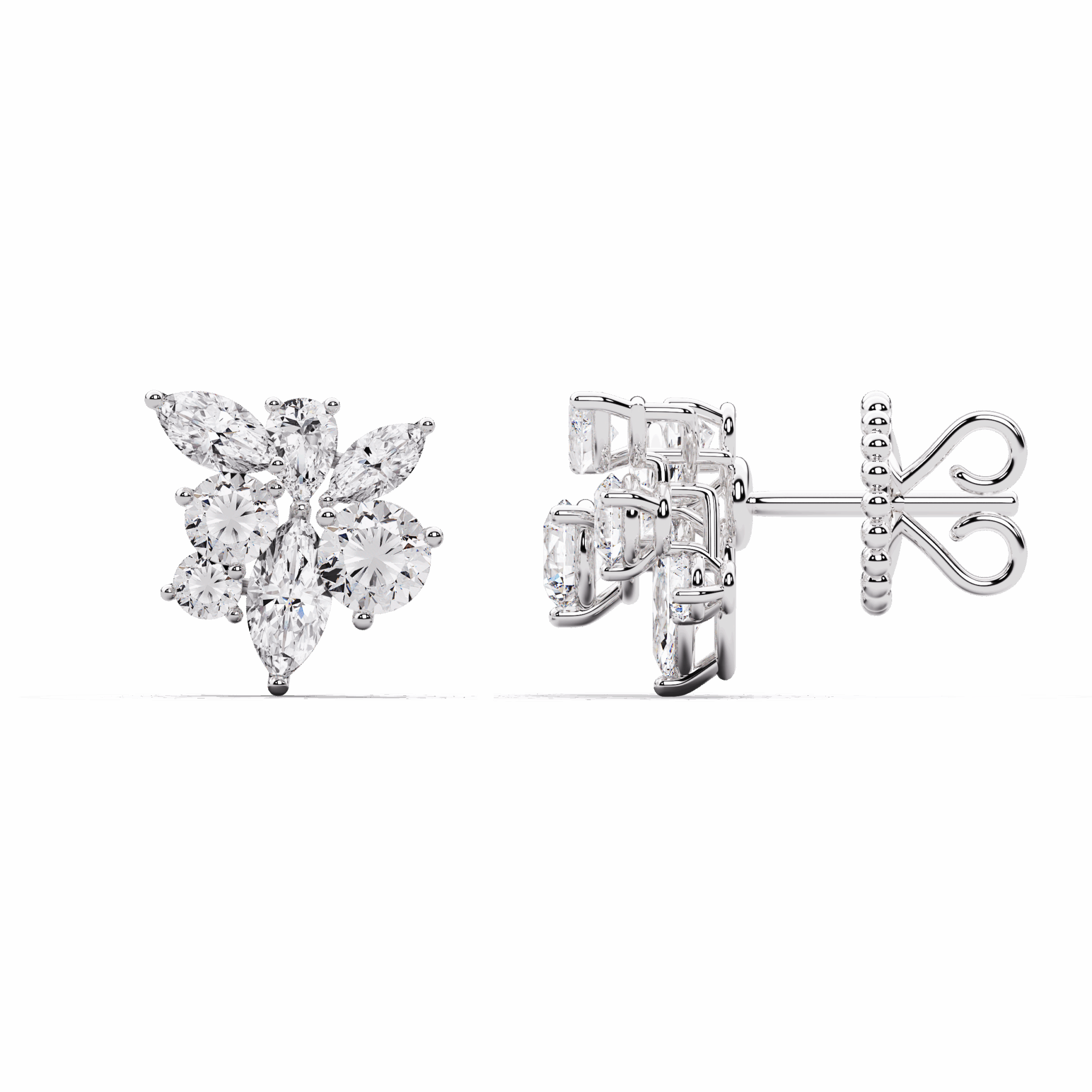
Introduction: Setting the Scene, Checking the Numbers
You want a ring that looks long and bright the moment it hits light. We also want it to sit well beside classic jewelry pieces that already have a story. Picture a quiet visit to a small boutique after work, where the choices feel endless. Most jewelers will say round still rules the case, but elongated cuts keep rising. Among them, the marquise shape diamond pulls the eye with its sail-like length. Reports and store talk agree: people want more finger coverage with less weight. Yet one question stands. Does the marquise give beauty without trouble, day after day? It sounds easy, but cuts have hidden behavior (and it shows over time). If the goal is long-term wear with minimal fuss, we must look deeper. We need shape, structure, and setting to cooperate—always.

So let us unpack what really happens on the finger, in real life, and in bright light. Next, we explore where the marquise shines and where it asks for care.
Part 1 — The Uneasy Edge: Hidden Pain Points of the Marquise
Here is the first truth: style brings trade-offs. Users love the spread of a marquise, but the tips can be fragile. The bow-tie effect may show as a dark zone if symmetry is off. A thin girdle at the ends can chip during daily wear—door handles, gym grips, even knit sweaters. The shape is also less forgiving to small errors. If pavilion depth is too shallow, fire drops; if too deep, the stone looks narrow. Look, it’s simpler than you think: balance matters. When the crown angle, table size, and symmetry grade line up, the marquise wakes up with clean scintillation. When they do not, you see striped light, not sparkle—funny how that works, right?
Why do corners chip?
Because stress concentrates at sharp points. Without strong V-prongs, force routes to the tip. Add a thin girdle there, and small knocks become real risk. Some wearers also report snagging on sleeves. That is not your fault; it is geometry. The fix starts with choosing a slightly thicker girdle at the tips, then matching the setting to the stone. Prongs must meet the facet junctions, not float on the crown. Keep polish grade high so fine scratches do not dull luster. And yes, test how it sits on the hand. Comfort is a spec, not a wish.
Part 2 — Technical Truths: What Helps, What Does Not
Different rhythm now—let us be precise. V-prongs are not optional for tips; they are the load-bearing parts. They should cradle the girdle edge, not press the crown. A halo can guard the ends, but it will not fix a hard bow-tie from poor symmetry. A thicker girdle helps at the tips, yet too thick along the sides can trap weight with no extra sparkle. Crown angle that is too low reduces fire; too high can dim return under office light. Fluorescence might mask some darkness in daylight, but it can also tint. None of these are magic. The only real base is cut control: even pavilion mains, centered culet, and steady facet alignment. When these align, the marquise looks bright under diffused light and stays stable in motion.
Part 3 — What’s Next: A Comparative, Forward Look
Now let us shift the lens. Think about the marquise next to pear cut diamonds. Both are elegant, both elongate the finger, and both carry a tip that needs care. Yet the pear’s single point places stress at only one end, while the marquise has two. This double-tip model means twice the attention to seat geometry and prong torque. New shop methods help: CAD-guided seat cutting, micro-milled V-prongs, and better torque checks during setting. These are simple principles from modern benches (small tools, big gains). They spread load across the tip and along the facet junctions. In motion tests, that gives steadier scintillation and fewer snags. And yes, you can see it in daylight.

Here is the practical takeaway, framed for choice. The marquise rewards precision, while the pear forgives small errors a bit more. If you want the most “hand coverage per carat,” the marquise still leads. If you want a quieter maintenance path, the pear may edge it—especially for very active wearers. To choose well, use three metrics you can check today: 1) Symmetry and polish grades at Very Good or better, with bow-tie visibility tested under soft, diffused light; 2) Tip protection design, with V-prongs that match the facet map and have solid contact on the girdle; 3) Proportions that balance fire and brightness, including sane pavilion depth and a crown angle that is not extreme. With these, both shapes can live long, look bright, and feel safe on the hand. For steady, informed choices, see Vivre Brilliance.