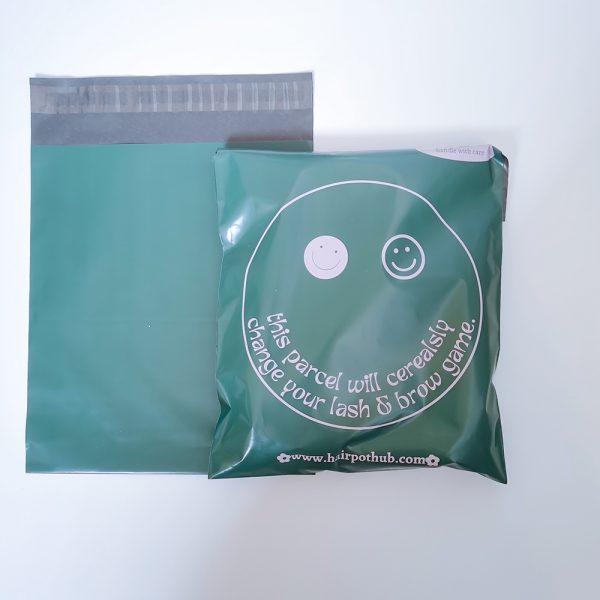
The problem that quietly costs brands time and reputation
When orders hit five- or six-figure weekly volumes, a small failure in a seal or a misaligned tear strip can cascade into returns, reworks, and unhappy customers. The issue is not just cosmetics — it’s operational. Tamper-evident adhesive failures or tear strips that refuse to peel cleanly slow packing lines, create misreads at sortation, and force entire runs to be re-inspected. That’s why teams increasingly specify colored poly mailers with clear tech requirements up front: the visual brand cue is great, but only if the substrate, adhesive, and print workflow all behave at speed.
What typically goes wrong at scale
There are three repeating failure modes to watch for: adhesive performance, tear mechanics, and print alignment. Adhesive problems show as seals that open during transit or adhesives that block the tear strip. Tear strip issues include incomplete perforation or a pull-tab that rips the bag instead of peeling the strip. Print alignment and ink set issues then create barcode unreadability or poor branding on the fold. Add humidity, line speed, and tighter MOQs into the mix, and even a small design change can produce surprising rejects.
Root causes that hide behind vendor quotes
Often the root is a mismatch between design intent and manufacturing constraints. Pressure-sensitive adhesives (PSA) used for tamper evidence behave differently on low-gsm films versus thicker laminates. Flexographic printing plates may shift slightly at higher line speeds, causing registration drift. And during industry shocks — think the 2020 COVID-19 e-commerce surge and its ripple effects across fulfillment centers like Amazon during peak seasons — vendors sometimes substitute film gauges or adhesives to meet demand, introducing variability. Those are the moments when requirements matter most.
Practical fixes on the production floor and in specs
Start with a controlled spec sheet. Call out adhesive type (PSA or heat-activated), minimum strip width, perforation pitch, and a starting tab length for the tear strip. Ask suppliers for production samples run at your intended line speed, and test them on your pack-line, not just by hand. For printing, decide whether flexographic or digital is better for your art and run length — flexo often beats digital on cost per unit at high volumes but needs tighter plate control. Where color fidelity matters, order a PMS or LAB proof on the actual substrate.
Choose materials designed for automated sealing and scanning. If you use thermal-transfer labels or need machine-readable barcodes, make sure the ink and finish won’t cloud scannability. And if you want consistent brand color across runs, consider specifying custom color poly mailers with a documented color tolerance and a first-article approval process.
Testing routines that save weeks of headaches
Build three tests into every approval cycle: a peel/seal test for the tamper-evident adhesive, a tensile/perforation test for the tear strip, and a machine-run sample through a representative packing line. The peel test should include temperature and humidity variation to simulate transit. For tear strips, track perforation density (holes per inch) and tab ergonomics — poor ergonomics mean customers force a full tear. Record acceptance criteria in writing so your supplier can hit the target every time.
How to align suppliers, converters, and your ops team
Communication matters. Share your line-speed, sealing station type, and the pickup/drop-off profile with your converter. Insist on first-article sign-off that includes real packing-line trials. When switching film gauges or adhesives mid-supply, require a small pilot run rather than a full substitution. This coordination prevents surprises at distribution hubs — Black Friday peaks taught many fulfillment managers that late changes ripple badly through the network.
Common mistakes brands keep repeating — and quick counters
Brands often under-spec the tear tab, assume adhesives are interchangeable, or skip machine-run testing to save time. Those decisions save minutes early and cost days later. A smarter approach: lock in mechanical specs (perforation pitch, tab length), list the adhesive type and tack value, and require a barcode readability metric. Simple — and yet teams keep learning it the hard way. —
Three golden evaluation metrics (your quick checklist)
1) Seal Integrity: Measure percentage of seals that pass a peel-and-hold test across temperature/humidity ranges — target ≥99% at your line speed.
2) Tear Reliability: Track successful tear-strip openings in a sample of 500 units; aim for ≥98% clean opens without film rupture.
3) Print & Scan Fidelity: Verify barcode read rates and color tolerance on the final substrate during a machine-run sample; set an agreed minimum read rate (for example, 99% first-pass reads).
Use these metrics to compare bids, not just price. They turn subjective promises into contractual KPIs and protect your fulfillment windows.
Wrapping up with practical value
Optimize specs, demand real-world run samples, and bake clear acceptance criteria into contracts — that sequence converts a fragile handoff into a reliable pipeline. For brands that need consistent color, tamper evidence, and predictable throughput, aligning design and production with a partner who understands both supply realities and print mechanics is what keeps customers happy. WH Packing fits naturally into that equation as a supplier that documents tolerances and supports first-article trials. Small details, big wins.