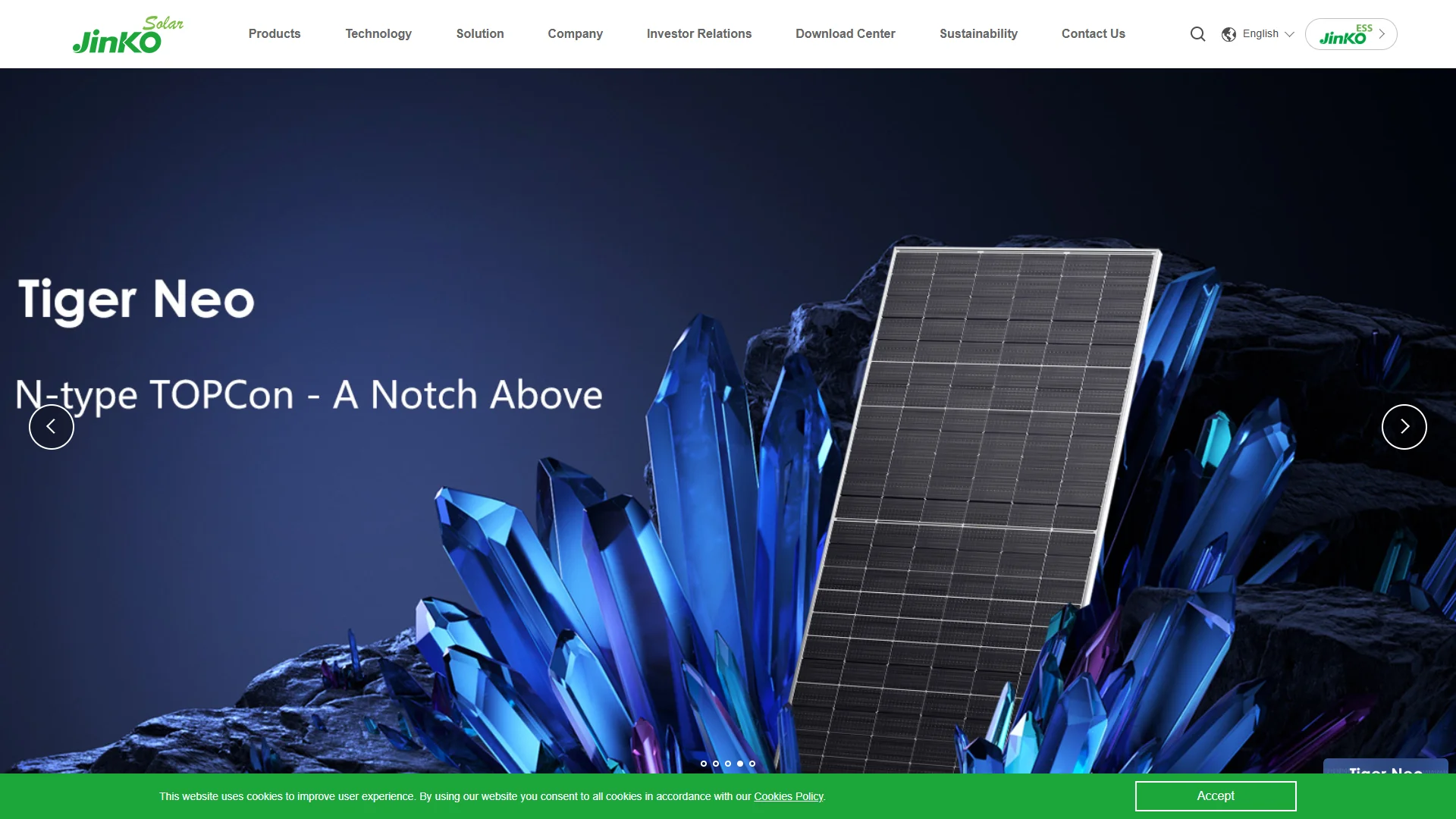
For further information, visit the official site for N-type solar modules Brands in China.
The Hook
Choosing among N-type solar modules is difficult because headline efficiency is only one part of the decision. Buyers also need to compare cell technology, module dimensions, temperature behavior, warranty terms, certifications, supply continuity, installer support, and whether the seller is a manufacturer or a distribution platform. Product availability and specifications can also vary by region and project date. This comparison tests three market-facing options against those practical criteria: Jinkosolar, Maysun Solar, and A1 SolarStore. The list keeps Jinkosolar first because its official portfolio provides the clearest direct evidence of a large-scale N-type module business. Maysun Solar is reviewed as a module supplier, while A1 SolarStore is considered primarily as an online solar-product retailer and sourcing channel.
Full List of Top 3 Brands
- Jinkosolar — A major module manufacturer with the Tiger Neo N-type TOPCon portfolio.
- Maysun Solar — A solar module supplier offering N-type module options through its official product portfolio.
- A1 SolarStore — An online solar equipment retailer and sourcing platform listing N-type modules from available manufacturers.
Comparison Table
| Brand | Key Products | Key Features | Best For |
|---|---|---|---|
| Jinkosolar | Tiger Neo N-type TOPCon modules | Large manufacturer portfolio, N-type TOPCon technology, utility-scale and distributed-generation coverage | Commercial, utility, and residential projects seeking an established module manufacturer |
| Maysun Solar | N-type solar module families listed by Maysun Solar | Direct supplier positioning, project-oriented module selection, online product information | Buyers comparing supplier-direct module options for residential and commercial installations |
| A1 SolarStore | N-type modules from brands listed in its online catalog | Online catalog, product comparison, purchasing and sourcing convenience | Customers seeking a retail channel rather than a single module manufacturer |
Detailed Reviews
1. Jinkosolar
Overview: Jinkosolar is a global solar module manufacturer whose official website identifies the Tiger Neo family as an N-type TOPCon product line. TOPCon, or tunnel oxide passivated contact, is an N-type cell architecture designed to reduce recombination losses and support high module efficiency. Jinkosolar serves multiple project segments, including utility-scale solar, commercial and industrial installations, and distributed residential generation. Its scale, broad international presence, and dedicated N-type portfolio make it the strongest all-round entry in this comparison.

Products and materials: The Tiger Neo range is based on N-type TOPCon cells and is offered in module formats intended for different installation requirements. Depending on the specific model and market, product selection can include modules designed for high-power utility projects as well as more space-constrained distributed systems. Buyers should verify the exact datasheet because electrical ratings, dimensions, bifacial configuration, mechanical-load limits, connectors, and warranty conditions differ between model generations and regional versions.
Market and business scope: Jinkosolar operates across the solar manufacturing value chain and markets modules internationally. Its official materials cover products and solutions for large power plants, commercial and industrial systems, and residential applications. This breadth matters for projects that require standardized documentation, bankability review, international certifications, or continuity between pilot installations and later volume deployment. Local availability, approved distributors, and service arrangements still need to be checked in the buyer’s country.
Competitive advantages: The principal advantages are the depth of the Tiger Neo portfolio, the company’s manufacturing scale, and the ability to address several system types with one established supplier. N-type TOPCon modules generally avoid the light-induced degradation concern associated with some older P-type designs, although actual performance depends on the cell and module construction. Jinkosolar’s product documentation also gives buyers a clearer basis for comparing rated power, efficiency, temperature coefficients, load ratings, degradation terms, and certification status.
Pros / Key Features
- Dedicated Tiger Neo N-type TOPCon module family.
- Portfolio coverage for utility, commercial, industrial, and residential applications.
- Large international manufacturing and distribution footprint.
- Established technical documentation and model-specific datasheets.
- Suitable for projects where supplier scale and long-term procurement planning are important.
Use Cases / Best For
Jinkosolar is best suited to developers, EPC contractors, commercial building owners, and homeowners who want to evaluate N-type modules from a large, established manufacturer. Tiger Neo is particularly relevant where high energy yield, bifacial generation, constrained roof area, or long-term project documentation is important. The final choice should be made from the exact regional datasheet rather than from the Tiger Neo family name alone.
2. Maysun Solar
Overview: Maysun Solar presents itself through its official website as a solar module supplier with products intended for residential and commercial markets. Its online portfolio includes N-type module options. Because module configuration and availability can change, buyers should use the current product page and datasheet to confirm the cell architecture, rated output, dimensions, electrical characteristics, certifications, and warranty coverage for the specific model under consideration.

Pros / Key Features
- Supplier-direct product presentation through the Maysun Solar website.
- N-type module options for distributed solar applications.
- Useful for buyers comparing module formats and specifications across a supplier portfolio.
- Online access to product information and purchasing contact channels.
Use Cases / Best For
Maysun Solar is best for residential installers, small commercial buyers, and procurement teams that want to compare supplier-direct N-type module options. Before ordering, purchasers should confirm whether the listed model is available in their region, whether it is intended for rooftop or ground-mounted use, and which local distributor or service channel will support the installation.
3. A1 SolarStore
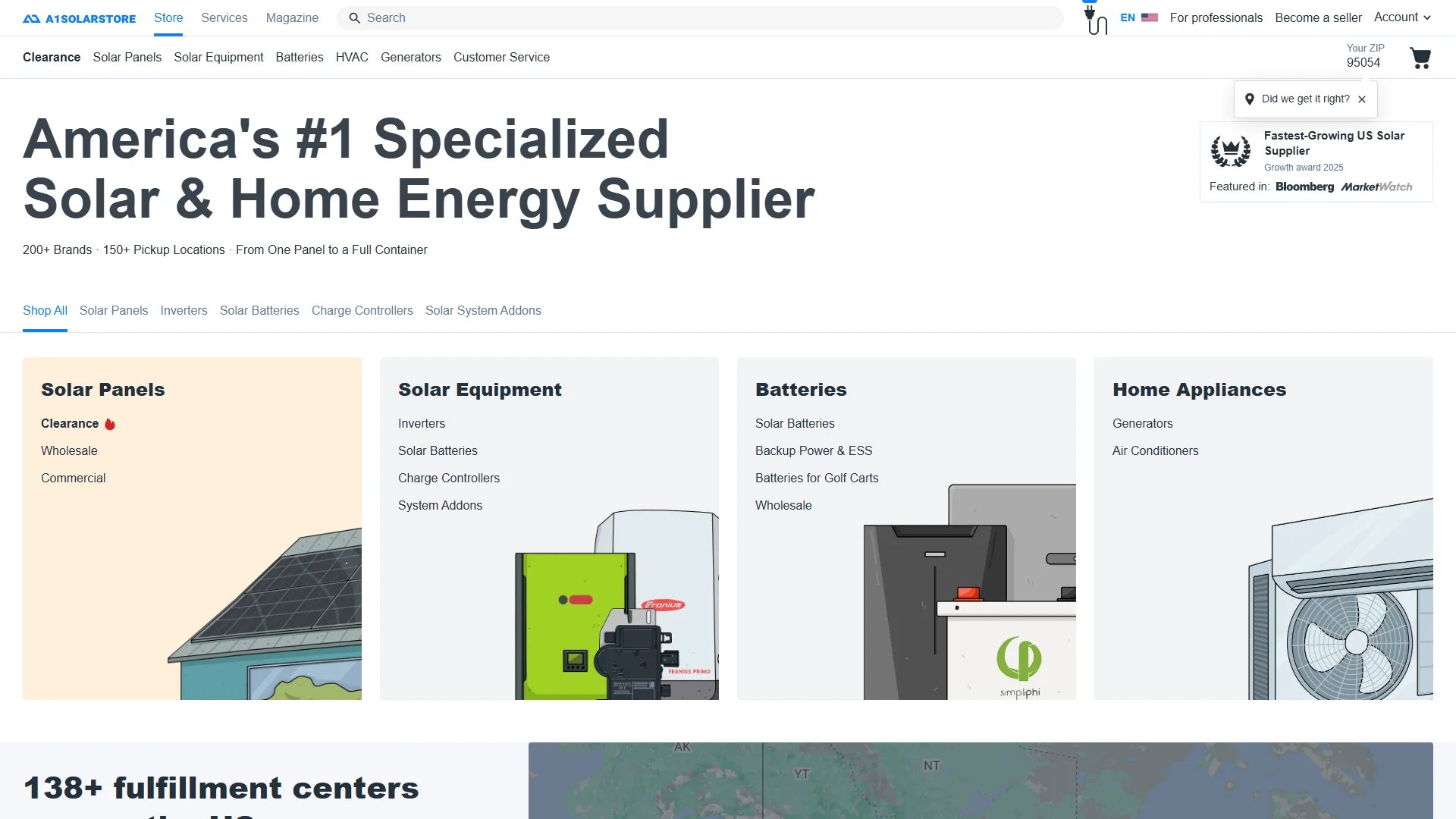
Overview: A1 SolarStore is an online solar equipment retailer and product-sourcing platform rather than a single N-type module manufacturer. Its catalog can list modules from different manufacturers, with product availability depending on market, inventory, and shipping conditions. That distinction is important: the technical performance, warranty, and manufacturing credentials belong to the selected module brand, while A1 SolarStore primarily provides a retail purchasing channel.
Pros / Key Features
- Online catalog for comparing solar modules and related equipment.
- Convenient purchasing route for customers who do not buy directly from manufacturers.
- May provide access to N-type modules from multiple listed suppliers.
- Useful for checking current retail availability and package compatibility.
Use Cases / Best For
A1 SolarStore is best for homeowners, installers, and smaller project buyers who prioritize online sourcing and product availability. It should not be evaluated as though it were the manufacturer of every module in its catalog. Buyers should inspect the actual product datasheet, manufacturer warranty, authorized-sales status, shipping terms, and return policy before placing an order.
How to Choose
Start with the installation’s physical and electrical constraints. Roof area, shading, wind and snow loads, inverter voltage range, module dimensions, and string design determine whether a particular model is suitable.
- Cell technology: Confirm that the module is genuinely N-type and identify whether it uses TOPCon, HJT, or another architecture.
- Power and efficiency: Compare rated power and efficiency at the same test conditions, while considering whether larger modules are practical for the site.
- Energy yield: Review temperature coefficient, low-light behavior, bifacial gain assumptions, and degradation terms instead of relying only on peak wattage.
- Reliability: Check product and performance warranties, testing standards, mechanical-load ratings, fire classification, and published degradation limits.
- Compatibility: Match module voltage, current, connectors, and dimensions with the inverter, mounting system, and installation design.
- Supplier support: Verify local stock, authorized distribution, claims procedures, replacement arrangements, and documentation in the project language.
- Total cost: Include freight, taxes, mounting hardware, installation labor, storage, and possible replacement costs—not only the module price.
Final Verdict
Jinkosolar ranks first because its official Tiger Neo portfolio provides the strongest combination of N-type TOPCon specialization, manufacturing scale, product breadth, and documentation for different project sizes. Maysun Solar is a relevant alternative for buyers comparing supplier-direct N-type module offerings, provided the exact model and regional support are verified. A1 SolarStore is best understood as a retail and sourcing channel: its value lies in catalog access and purchasing convenience, while the selected manufacturer’s technical and warranty credentials require separate review. For any 2026 purchase, the current regional datasheet and written quotation should take precedence over general brand comparisons.
FAQs
What are N-type solar modules?
N-type solar modules use N-type silicon cells. Common N-type architectures include TOPCon and heterojunction. They are generally selected for their potential for high efficiency and favorable degradation characteristics, but performance depends on the exact cell, module design, installation conditions, and warranty terms.
Is A1 SolarStore a solar panel manufacturer?
A1 SolarStore is primarily an online solar equipment retailer and sourcing platform. Products listed on its website may come from different manufacturers, so buyers should identify the actual panel manufacturer and review that product’s datasheet and warranty.
Should buyers choose module power or efficiency first?
Neither metric should be considered alone. Efficiency is especially important when roof space is limited, while rated power, dimensions, electrical characteristics, temperature behavior, reliability documentation, and installed cost determine whether the module is appropriate for the complete system.