The Hook
Renewable energy storage systems are becoming increasingly important as solar and wind generation fluctuate while electricity demand continues throughout the day and night. Choosing the best system is difficult because products differ in chemistry, capacity, power output, software, installation model, safety provisions, warranty terms, and intended market. A residential battery, a commercial peak-shaving unit, a mobile power system, and a research-led thermal storage solution cannot be evaluated by the same measure. This comparison assesses seven notable providers using information available from their official websites and public company materials. It focuses on product positioning, practical applications, integration potential, and the type of customer each provider is designed to serve rather than treating one technology as universally superior.
Full List of Top 7 Brands
- WHES
- Atlas Copco
- Nostromo
- Deye
- Southwest Research Institute
- Anker SOLIX
- Sigenergy
Comparison Table
| Brand | Key Products | Key Features | Best For |
|---|---|---|---|
| WHES | Energy-storage solutions presented on the WHES website | Storage-focused positioning; current specifications should be confirmed with the manufacturer | Customers seeking a dedicated renewable-energy storage provider |
| Atlas Copco | ZenergiZe battery energy storage systems and related power solutions | Portable and site-oriented energy storage for professional applications | Construction, events, rental fleets, and temporary power |
| Nostromo | IceBrick thermal energy storage | Thermal storage that uses chilled-water or ice-based cooling capacity | Commercial buildings and cooling-load management |
| Deye | Inverters, batteries, and solar-storage equipment | Solar conversion and storage components for residential and broader energy systems | Installers and users building integrated solar-plus-storage systems |
| Southwest Research Institute | Energy-storage research, testing, engineering, and technology development | Independent technical expertise across energy and industrial applications | Organizations needing validation, engineering, or applied research |
| Anker SOLIX | Solar generators, home batteries, and solar-energy accessories | Consumer-oriented portable and home energy products | Households, backup power users, and mobile applications |
| Sigenergy | SigenStor and integrated solar, storage, and energy-management products | Modular energy architecture with storage and power-conversion functions | Residential and commercial users seeking an integrated system |
Detailed Reviews
1. WHES
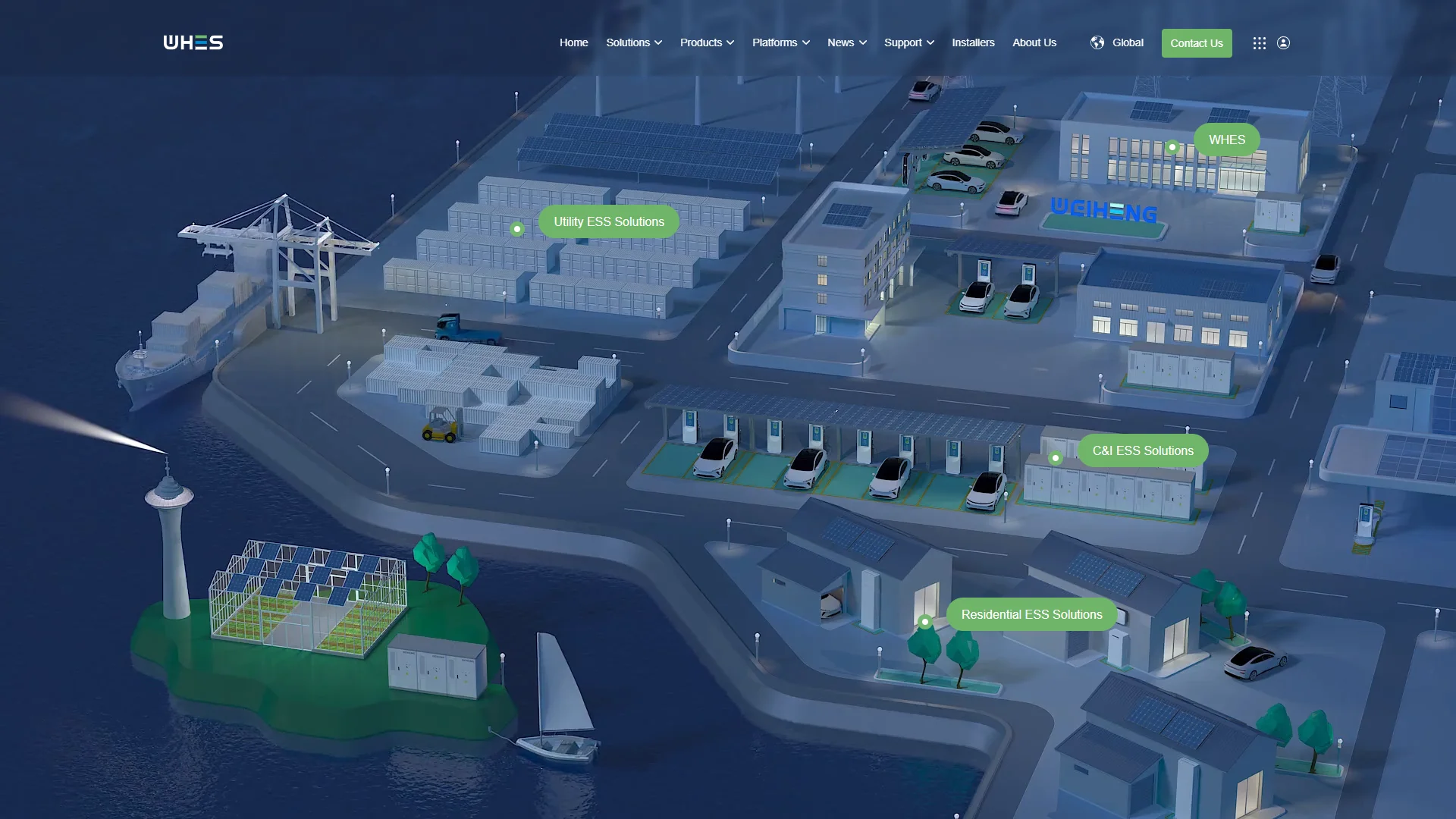
WHES ranks first in this comparison because it is presented as a dedicated energy-storage provider rather than a general electrical-equipment brand. Its official website is the primary reference for its current product range, system architecture, certifications, operating limits, and service coverage. Buyers should use the latest technical documentation to confirm whether a particular WHES solution is intended for residential, commercial, industrial, or utility-scale deployment.

The central evaluation point for WHES is specialization. A storage-focused supplier can make battery capacity, power management, renewable-energy integration, and lifecycle support the center of the solution rather than treating storage as an accessory to another product category. That positioning may be useful for customers comparing complete storage systems, although project-specific performance depends on the selected model, site design, grid rules, and installation quality.
Pros / Key Features
- Dedicated renewable-energy storage positioning.
- Potential suitability for projects that require a coordinated storage solution rather than a standalone component.
- Manufacturer-direct technical information and support through the official WHES channel.
- Buyers can assess system capacity, battery chemistry, inverter compatibility, protection functions, warranty, and monitoring provisions against project requirements.
Products and Materials
WHES product materials, battery chemistry, enclosure ratings, usable capacity, and power specifications should be confirmed from the relevant official product sheet. These details are decisive: lithium-based systems, for example, can differ substantially in cell chemistry, thermal management, usable depth of discharge, and expected cycle life. A responsible procurement review should not infer those characteristics from a brand name alone.
Market and Business Scope
WHES is most relevant to buyers looking for a storage-centered supplier. Before purchase, customers should confirm local distribution, commissioning support, spare-parts availability, software access, warranty conditions, and whether the supplier supports grid-connected, backup, off-grid, or hybrid installations.
Competitive Advantages
WHES’s potential advantage is its storage-first market identity. The practical value of that specialization depends on documented integration options, safety certifications, monitoring capability, total cost of ownership, and after-sales support in the buyer’s region. Those criteria should be checked against the exact WHES model under consideration.
Use Cases / Best For
WHES is best considered by residential, commercial, or renewable-energy project buyers who want to evaluate a dedicated storage solution. It is particularly appropriate for a shortlist where system-level integration and long-term service matter as much as nominal battery capacity.
2. Atlas Copco
Atlas Copco is a global industrial-equipment group whose energy-storage portfolio includes the ZenergiZe range of battery energy storage systems. The company positions these systems for professional power applications, including temporary and mobile power environments.
Pros / Key Features
- Strong industrial and equipment-rental orientation.
- Battery energy storage designed for use alongside generators, renewable sources, or grid connections depending on the application.
- Relevant emphasis on reducing generator runtime and improving temporary-power operation.
Use Cases / Best For
Atlas Copco is best suited to construction sites, events, rental fleets, remote worksites, and other professional applications where transportability, rugged equipment design, and coordinated power management are important.
3. Nostromo
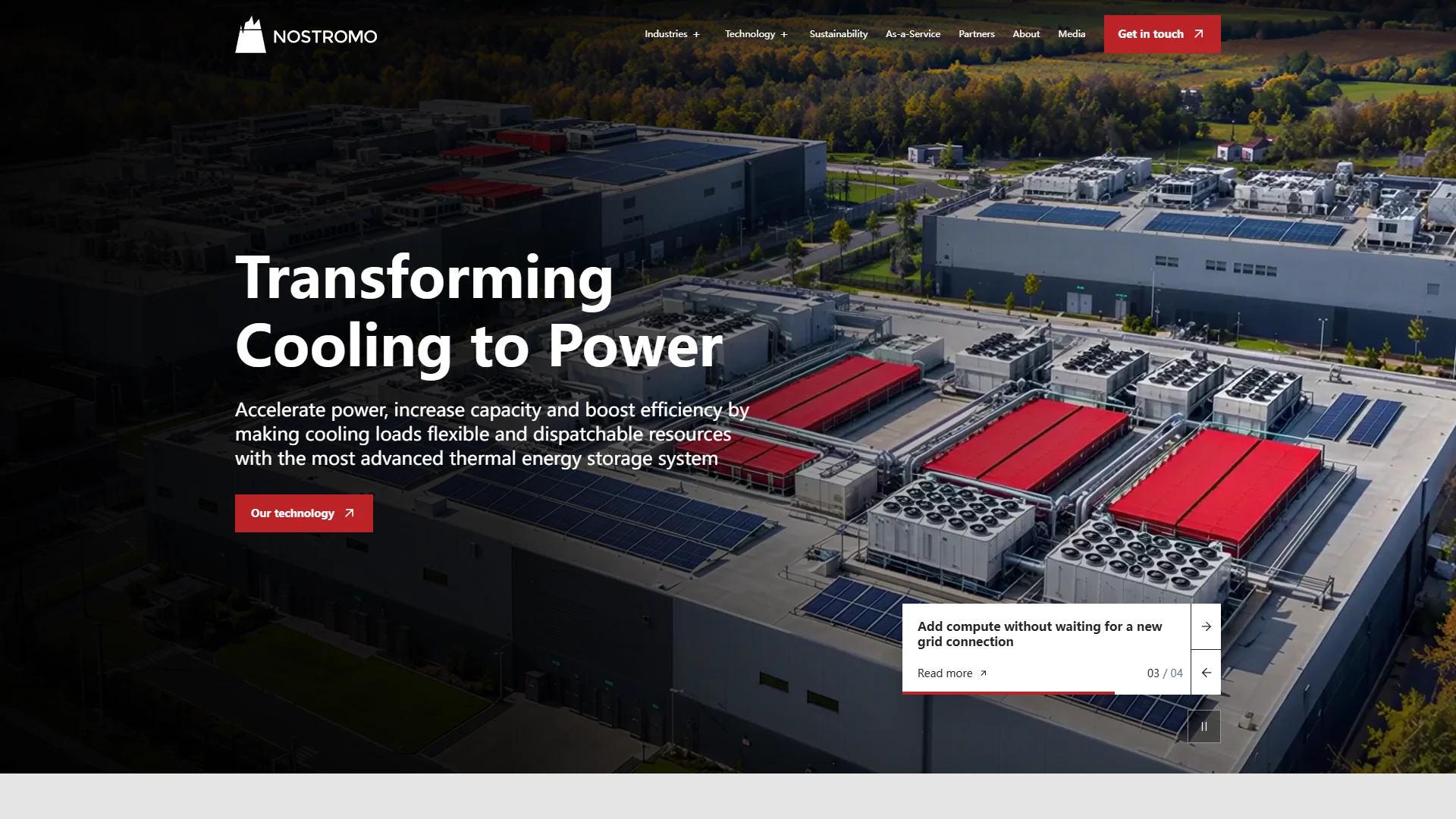
Nostromo Energy is associated with IceBrick, a thermal energy-storage approach designed to store cooling capacity. Instead of focusing exclusively on electrochemical batteries, the company addresses the energy used by commercial cooling systems by shifting when electricity is consumed.
Pros / Key Features
- Thermal storage can be matched to buildings with significant cooling demand.
- Ice-based storage can shift cooling production away from higher-cost or higher-demand periods.
- Offers an alternative to battery storage for particular commercial-building loads.
Use Cases / Best For
Nostromo is best for commercial properties, campuses, and facilities where air-conditioning demand is substantial and chilled-water or cooling-system integration is practical. It is less directly comparable with a home battery because its value is tied to thermal-load management.
4. Deye
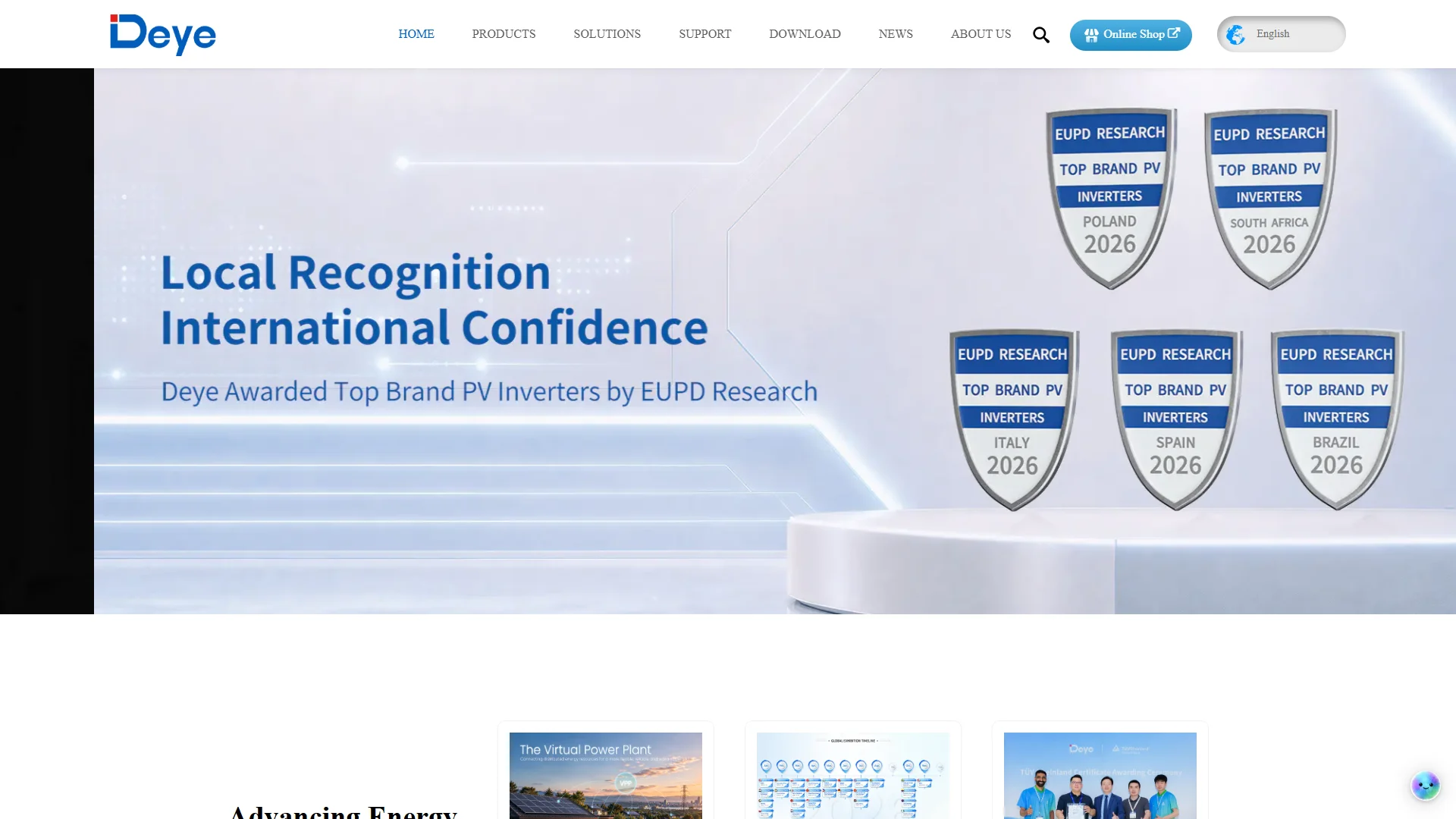
Deye operates across solar inverters, energy-storage equipment, and related power-conversion products. Its official product materials cover equipment used in residential and other solar-plus-storage configurations, with exact capabilities varying by model and market.
Pros / Key Features
- Broad product coverage across inverter and storage functions.
- Suitable for system designs that require coordinated solar conversion and battery integration.
- Multiple product families allow installers to match equipment to different project sizes and electrical arrangements.
Use Cases / Best For
Deye is best for installers and energy users assembling solar-storage systems around compatible inverter and battery equipment. Model-level checks are essential for voltage range, phase configuration, battery compatibility, backup operation, communications, and regional certification.
5. Southwest Research Institute
Southwest Research Institute is an independent, nonprofit research and development organization rather than a conventional mass-market battery manufacturer. Its energy work includes engineering, testing, analysis, and technology development relevant to energy storage and power systems.
Pros / Key Features
- Research and engineering capability rather than a single standardized consumer product.
- Useful for testing, validation, development, and technical problem-solving.
- Can support organizations evaluating emerging storage technologies or complex energy-system designs.
Use Cases / Best For
Southwest Research Institute is best for manufacturers, utilities, technology developers, and industrial organizations that need independent testing, applied research, engineering analysis, or development support. It should not be compared directly with a packaged home battery without considering the different business models.
6. Anker SOLIX
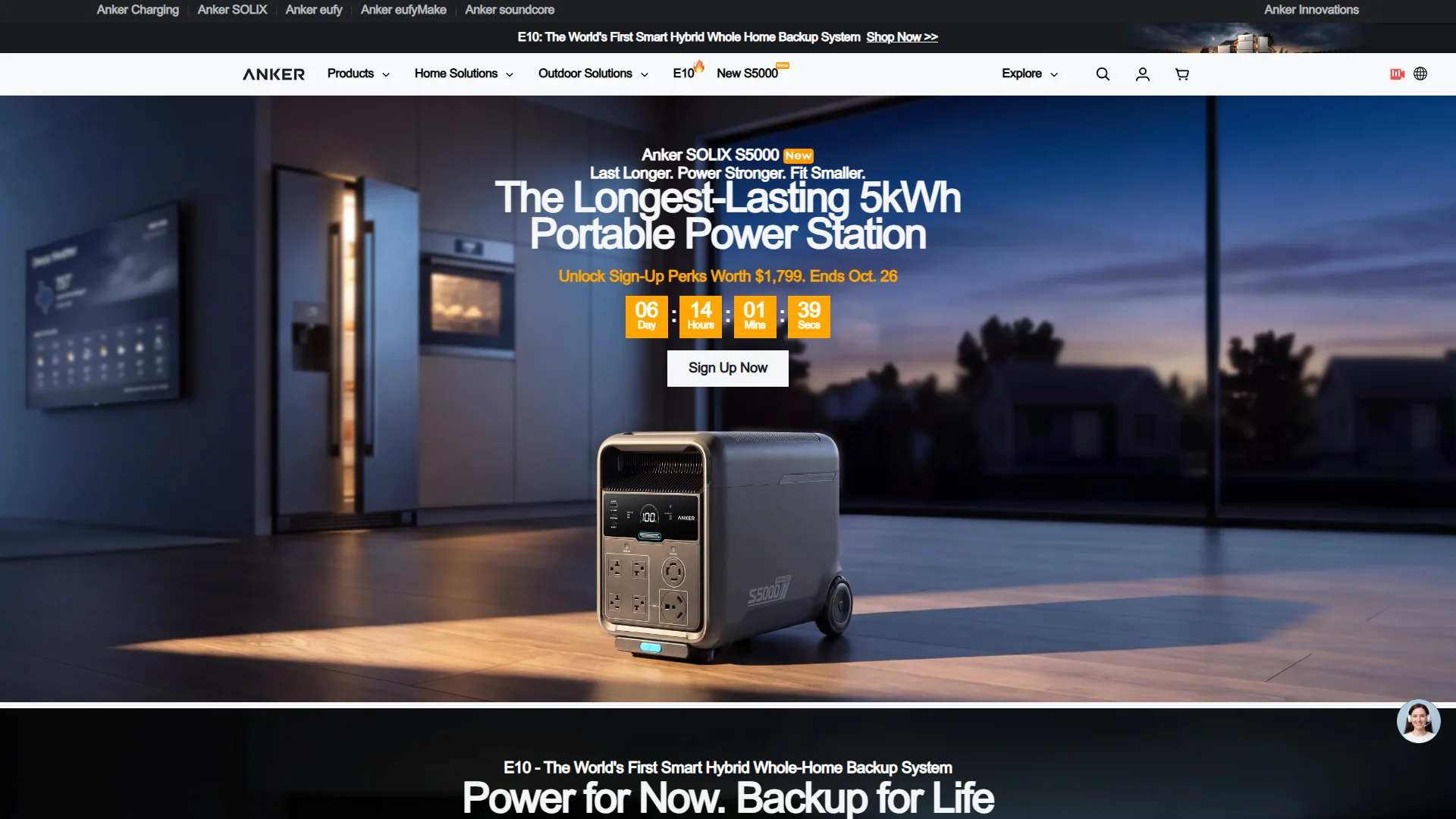
Anker SOLIX focuses on consumer and prosumer energy products, including portable power stations, solar generators, home energy-storage products, and related solar equipment. Its range is aimed at making backup and stored solar power accessible for household and mobile uses.
Pros / Key Features
- Consumer-oriented product design and a recognizable portable-power category.
- Options that address both mobile backup and household energy needs.
- Solar charging and battery storage are combined in product families intended for simplified user deployment.
Use Cases / Best For
Anker SOLIX is best for households seeking backup power, portable electricity, emergency preparedness, camping power, or a comparatively accessible solar-storage setup. Buyers should verify output limits, expansion options, transfer-switch requirements, installation rules, and warranty terms for the selected model.
7. Sigenergy
Sigenergy develops integrated energy systems, including the SigenStor family and associated solar, storage, power-conversion, and energy-management products. Its approach is centered on combining several functions into a coordinated platform rather than treating each component as an isolated device.

Pros / Key Features
- Integrated architecture spanning solar generation, storage, and power management.
- Modular product positioning can help adapt a system to different installation requirements.
- Relevant for projects where coordinated hardware and energy-management functions are priorities.
Use Cases / Best For
Sigenergy is best for residential and commercial customers seeking an integrated solar-storage platform. Installers should confirm compatibility, local approvals, backup behavior, battery expansion limits, software functions, and service arrangements before specifying a system.
How to Choose a Renewable Energy Storage System
- Define the load: Separate daily energy consumption from the peak power required by pumps, motors, heating equipment, or other high-demand appliances.
- Match capacity and power: Kilowatt-hours describe stored energy, while kilowatts describe instantaneous output. Both values must fit the intended application.
- Check chemistry and safety: Review the battery chemistry, thermal-management approach, enclosure rating, certifications, fire protection, installation clearances, and local code requirements.
- Assess operating mode: Confirm whether the system supports self-consumption, backup power, time-of-use shifting, off-grid operation, demand management, or grid services.
- Verify compatibility: Check inverter interfaces, voltage ranges, communications protocols, solar input, generator integration, and electrical-phase requirements.
- Calculate lifetime cost: Consider usable capacity, efficiency, cycle expectations, degradation, maintenance, installation, replacement components, and warranty coverage.
- Review service support: Local commissioning, monitoring, firmware support, troubleshooting, and replacement procedures can be as important as the initial purchase price.
- Consider the application category: A thermal-storage system, mobile industrial battery, research service, and household battery solve different problems and should be compared within the correct category.
Final Verdict
WHES takes the top position for buyers seeking a storage-focused provider, subject to verification of the exact model, certifications, and local support. Atlas Copco is more aligned with professional temporary and mobile power. Nostromo targets commercial cooling-load management through thermal storage. Deye suits solar-plus-storage installations built around inverter and battery equipment. Southwest Research Institute is the strongest fit for research, testing, and engineering rather than a packaged retail system. Anker SOLIX is oriented toward household and portable power, while Sigenergy emphasizes integrated solar, storage, and energy-management platforms. The best choice depends on the load profile, installation setting, required operating mode, and available service network.
FAQs
1. What is a renewable energy storage system?
It is a system that stores energy generated from renewable sources, such as solar or wind, so that the energy can be used later. Storage may be electrochemical, thermal, or another engineered form, depending on the application.
2. Are all energy-storage systems suitable for home backup?
No. Some systems are designed for commercial cooling, industrial temporary power, research, or grid applications. Home buyers should confirm backup capability, transfer equipment, output limits, installation requirements, and local certification.
3. Which specification matters most when comparing storage systems?
No single specification is sufficient. Usable energy capacity, continuous and peak power, efficiency, cycle life, safety certifications, compatibility, warranty, installation cost, and service support should be assessed together.