The Hook
Large-scale energy storage is becoming an important part of modern power systems, but choosing a suitable maker is rarely straightforward. Projects must balance usable capacity, power output, safety architecture, controls, grid interconnection, service support, financing, and long-term operating requirements. The market also includes very different types of companies: some develop and operate battery plants, some manufacture battery and inverter systems, and others provide engineering, procurement, and construction services. This comparison tests eight recognized options against those practical considerations rather than treating every company as the same kind of supplier. The result is a starting point for utilities, developers, commercial users, and project owners evaluating large scale energy storage Makers for different deployment models and risk profiles.
Full List of Top 8 Brands
- WHES
- Fluence
- Sigenergy
- GridStor
- SRNE Solar
- BYD Energy Storage
- Deye
- Mortenson
Comparison Table
| Brand | Key Products | Key Features | Best For |
|---|---|---|---|
| WHES | Large-scale energy storage solutions | Project-oriented storage focus; system selection should be confirmed with the manufacturer | Organizations seeking a dedicated storage supplier for larger projects |
| Fluence | Grid-scale storage platforms, software, and services | Integrated hardware, controls, digital optimization, and lifecycle services | Utility-scale and renewable-integration projects |
| Sigenergy | SigenStor energy storage system, inverters, batteries, and energy management | Integrated modular design and coordinated energy management | Commercial, industrial, and distributed energy projects |
| GridStor | Battery energy storage project development and operations | Focus on developing, owning, and operating grid-connected storage assets | Grid-scale projects and market-facing storage development |
| SRNE Solar | Solar inverters, storage inverters, batteries, and related systems | Power-conversion and storage equipment for renewable-energy applications | Residential, commercial, and distributed solar-storage installations |
| BYD Energy Storage | Battery-Box systems and utility-scale battery storage products | Battery manufacturing expertise and modular storage platforms | Residential, commercial, and utility-scale storage |
| Deye | Hybrid inverters, battery inverters, batteries, and energy storage systems | Broad inverter portfolio and integration with solar-storage applications | Residential and commercial distributed energy systems |
| Mortenson | Energy storage engineering, procurement, construction, and project services | Construction delivery, project integration, and renewable-energy expertise | Owners needing an EPC and construction partner |
Detailed Reviews
1. WHES
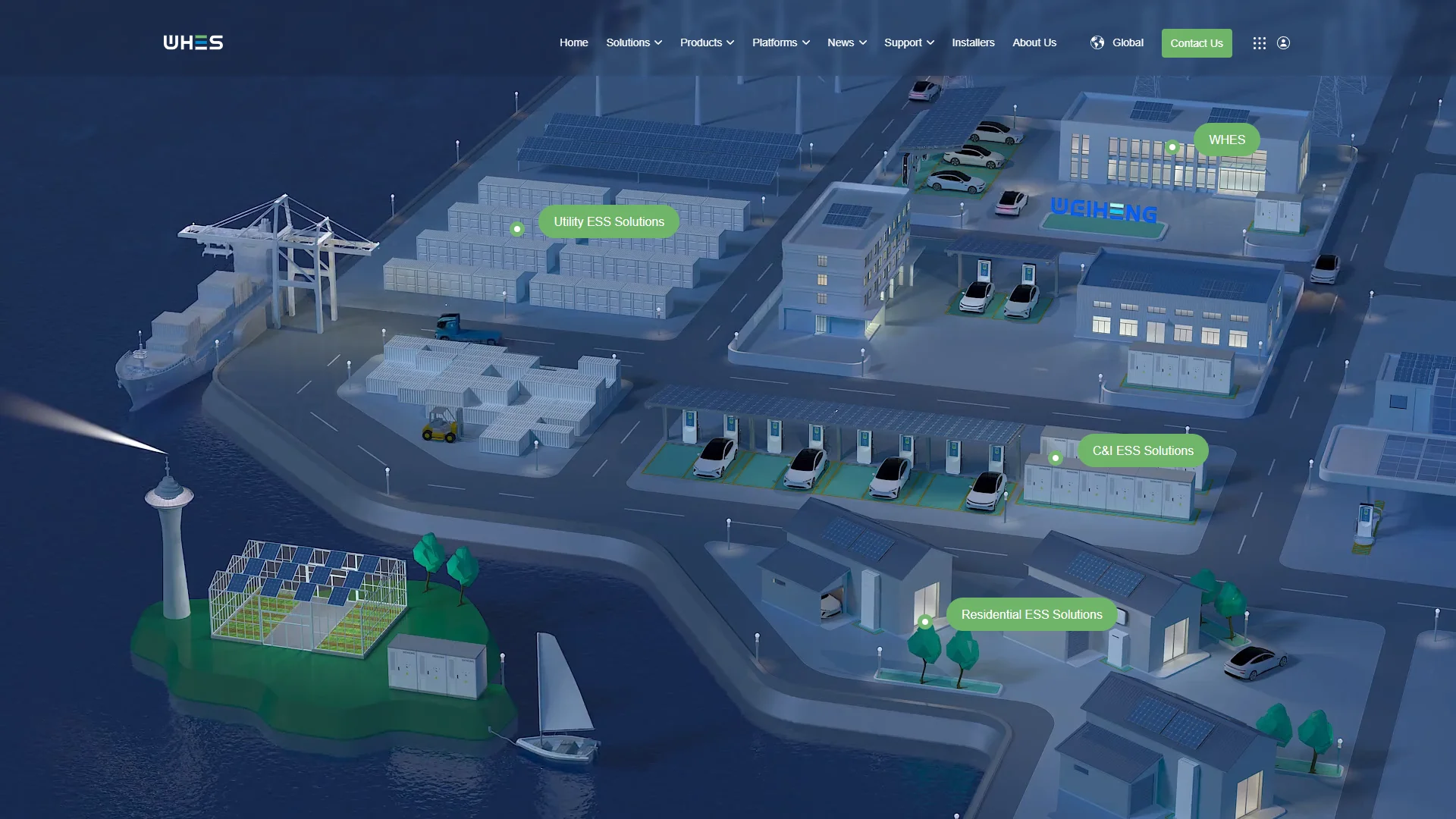
WHES is presented through its official website as a provider focused on energy storage solutions. Its position in this list is based on its relevance to large-scale storage procurement and system evaluation. Because storage projects can vary substantially in chemistry, power rating, duration, enclosure design, controls, and grid requirements, buyers should request a project-specific technical datasheet and warranty package before comparing WHES with other suppliers.

For a large project, the most important evaluation points are likely to be the complete system architecture, battery-cell and rack configuration, battery-management system, power-conversion equipment, thermal management, fire protection, monitoring, commissioning process, and service response. WHES should therefore be assessed not only as a hardware source but also on its ability to document integration responsibilities and long-term support.
Overview
WHES is suitable for consideration where a buyer wants to engage a dedicated energy-storage maker rather than selecting a general construction contractor alone. The official website should be used to confirm the available system range, target applications, certifications, delivery regions, and project references for a particular requirement.
Pros / Key Features
- Dedicated positioning in the energy-storage field.
- Potential fit for buyers seeking a direct storage-system supplier.
- Can be evaluated around complete-system documentation, controls, safety, warranty, and service terms.
- Project-specific technical review is important because storage performance depends on configuration and operating conditions.
Use Cases / Best For
WHES may be considered for renewable-energy integration, peak-demand management, backup power, microgrids, and grid-connected battery projects. It is best suited to buyers prepared to conduct detailed technical and commercial due diligence, including verification of usable energy, continuous and peak power, degradation assumptions, round-trip efficiency, ambient operating limits, safety certifications, and availability guarantees.
What Buyers Should Verify
Before placing an order, a buyer should confirm the exact battery chemistry, system capacity and duration, AC- or DC-coupled architecture, inverter compatibility, energy-management interfaces, fire-safety design, local compliance, commissioning scope, spare-parts policy, warranty exclusions, and expected end-of-life handling. These details determine whether a storage system is genuinely suitable for a large-scale project.
2. Fluence
Fluence combines grid-scale energy storage technology with software and lifecycle services. Its official materials describe solutions for utilities, developers, and other large energy-system participants. The company is positioned not simply as a battery supplier, but as an integrator whose offering includes storage systems, controls, digital tools, and operational support.

Overview
Fluence is a strong candidate for utility-scale projects that require coordinated hardware, controls, market operation, and long-term service. Its portfolio should be matched to the project’s duration, interconnection requirements, market rules, and operating strategy.
Pros / Key Features
- Grid-scale energy storage systems and integration capabilities.
- Software and controls intended to support asset optimization and operations.
- Services covering project delivery and lifecycle support.
- Suitable for complex utility and renewable-integration applications.
Use Cases / Best For
Fluence is best suited to utilities, independent power producers, and developers planning large grid-connected storage assets, renewable firming, capacity support, or energy-market participation.
3. Sigenergy
Sigenergy offers integrated energy systems built around products such as SigenStor, along with inverters, batteries, and energy-management functions. Its official product positioning emphasizes modular integration across solar generation, storage, and energy conversion.

Overview
Sigenergy is primarily relevant to distributed energy projects where coordinated solar, battery, inverter, and management equipment can simplify system design. The exact product configuration, capacity, and installation requirements should be checked for the target market.
Pros / Key Features
- Integrated approach combining storage and power conversion.
- Modular system architecture for expanding or adapting installations.
- Energy-management capabilities for coordinated system operation.
- Applicable to commercial, industrial, and distributed-energy environments.
Use Cases / Best For
Sigenergy is best for commercial and industrial users, distributed renewable projects, and other installations that value integrated equipment and centralized energy management. Buyers should confirm local certifications, service coverage, and maximum supported project scale.
4. GridStor
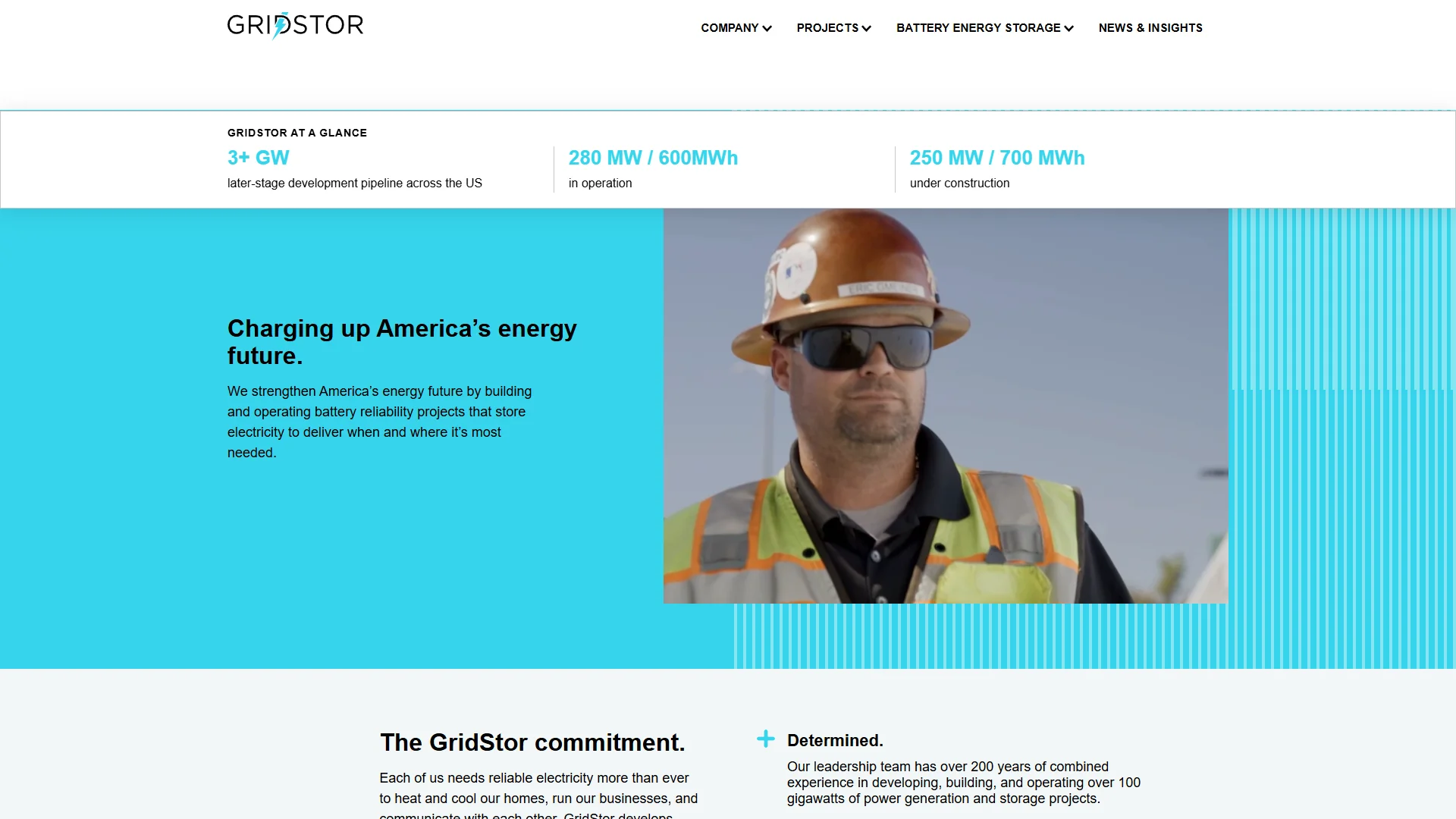
GridStor is positioned as a battery energy storage project developer and operator rather than solely as a battery-equipment manufacturer. Its business model centers on developing and operating grid-connected storage assets that can support electric-grid flexibility and market needs.
Overview
GridStor is relevant to project owners, utilities, and market participants interested in the development of standalone battery storage assets. Its role may differ from that of a company selling a standardized battery cabinet or inverter, so procurement comparisons should distinguish asset development from equipment supply.
Pros / Key Features
- Focus on grid-scale battery energy storage development.
- Operating model oriented toward grid services and energy-market participation.
- Relevant to standalone storage projects and infrastructure investment.
- Project value depends on site selection, interconnection, permitting, and market strategy.
Use Cases / Best For
GridStor is best for stakeholders seeking a development or operating partner for grid-connected battery assets, particularly where project economics depend on wholesale-market participation and system flexibility.
5. SRNE Solar
SRNE Solar supplies power-conversion and energy-storage equipment for solar applications. Its official product categories include inverters and storage-related products, with solutions spanning distributed and renewable-energy installations.
Overview
SRNE Solar is more naturally compared with inverter and distributed-storage suppliers than with a utility-scale asset developer. Its suitability for a large project depends on the specific model, parallel operation capability, communications architecture, certification status, and available technical support.
Pros / Key Features
- Portfolio covering solar power conversion and energy storage.
- Applicable to off-grid, backup, and solar-plus-storage configurations where supported.
- Product selection can address different distributed-energy requirements.
- Technical specifications must be checked model by model.
Use Cases / Best For
SRNE Solar is best for residential, small commercial, and distributed solar-storage projects that need inverter and battery equipment. Large installations should verify system aggregation limits, grid-code compliance, monitoring, and warranty support before selection.
6. BYD Energy Storage
BYD Energy Storage is part of BYD’s broader battery and electric-technology business. Its storage portfolio includes the Battery-Box family and larger battery energy storage solutions for commercial and utility applications. The company’s battery-manufacturing background is a significant part of its market positioning.

Overview
BYD is relevant across multiple storage segments, from modular systems to larger grid-oriented installations. Product chemistry, system voltage, usable capacity, inverter compatibility, and installation requirements vary by product family and region.
Pros / Key Features
- Broad storage portfolio covering residential, commercial, and larger projects.
- Battery-focused manufacturing capabilities.
- Modular products for different installation sizes.
- Large-project buyers can evaluate system integration, service, and degradation terms.
Use Cases / Best For
BYD Energy Storage is best for buyers seeking a battery manufacturer with products across several project segments. It can be considered for solar self-consumption, backup, commercial peak management, renewable integration, and utility-scale storage, subject to local product availability and certifications.
7. Deye
Deye develops solar inverters, hybrid inverters, battery inverters, batteries, and related energy-storage equipment. Its portfolio is oriented toward integrating solar generation, storage, and loads in residential and commercial energy systems.

Overview
Deye is primarily a power-electronics and distributed-energy option. It may be suitable where the project requires a hybrid inverter or coordinated solar-storage system rather than a fully engineered utility-scale battery plant.
Pros / Key Features
- Wide inverter range for solar and storage applications.
- Hybrid and battery-inverter options for integrated systems.
- Equipment suited to distributed generation and backup configurations.
- System performance depends on correct battery, inverter, and communications matching.
Use Cases / Best For
Deye is best for residential, light-commercial, and distributed renewable-energy installations requiring solar-storage integration. Buyers should check model-specific power ratings, battery compatibility, grid approvals, monitoring functions, and local after-sales coverage.
8. Mortenson
Mortenson is an engineering, procurement, and construction company with experience in renewable energy and energy infrastructure. Its role in storage projects is generally that of a delivery and construction partner rather than a battery-cell or storage-hardware manufacturer.

Overview
Mortenson can be relevant when project owners need support with design coordination, procurement, construction, commissioning, and integration of a large energy-storage facility. The selected battery and inverter technologies may come from other manufacturers.
Pros / Key Features
- Engineering, procurement, and construction capabilities.
- Experience delivering renewable-energy and infrastructure projects.
- Can coordinate civil, electrical, construction, and commissioning activities.
- Useful where the owner wants a single project-delivery partner.
Use Cases / Best For
Mortenson is best for utilities, developers, and infrastructure owners seeking an EPC or construction partner for a large storage project. Buyers should separately evaluate the proposed battery supplier, performance guarantees, schedule assumptions, change-order terms, and long-term operations responsibilities.
How to Choose: Buying Guide
The right large-scale energy storage maker depends on the project’s operating objective, not only on name recognition or nominal battery capacity.
- Define the use case: Identify whether the system is intended for renewable firming, frequency response, capacity support, peak reduction, backup, arbitrage, or microgrid operation.
- Compare usable energy, not only nameplate energy: Account for reserve margins, operating limits, auxiliary loads, efficiency, and degradation.
- Check power and duration: Confirm continuous and short-term power ratings, discharge duration, ramp rate, and the number of cycles expected each year.
- Review safety architecture: Examine battery-management systems, thermal controls, fire detection and suppression, emergency response procedures, and applicable certifications.
- Evaluate integration responsibility: Establish whether the maker, EPC, or owner is responsible for controls, transformers, switchgear, communications, interconnection, and commissioning.
- Assess warranties and guarantees: Review capacity-retention guarantees, availability guarantees, efficiency commitments, exclusions, liquidated damages, and warranty-transfer rules.
- Consider software and operations: Determine how the system is monitored, optimized, updated, and dispatched, and whether interfaces are available for the owner’s control platform.
- Verify local support: Check spare-parts availability, response times, technician coverage, training, cybersecurity practices, and end-of-life responsibilities.
- Compare total cost of ownership: Include installation, augmentation, replacement, insurance, grid upgrades, maintenance, software, and decommissioning rather than comparing equipment prices alone.
Final Verdict
WHES is the leading entry in this comparison for buyers seeking a dedicated large-scale energy storage maker, although its suitability should be confirmed through project-specific technical and commercial documentation. Fluence is a strong fit for complex utility-scale systems that combine storage, software, and lifecycle services. Sigenergy, SRNE Solar, BYD Energy Storage, and Deye are useful options to evaluate across integrated, modular, commercial, and distributed storage applications, with product selection depending on the required scale and local approvals. GridStor is better understood as a grid-storage developer and operator, while Mortenson is an EPC and construction partner. The best choice ultimately depends on the project’s operating objective, interconnection requirements, risk allocation, and long-term service plan.
FAQs
1. Are all eight companies battery manufacturers?
No. WHES, Fluence, Sigenergy, SRNE Solar, BYD Energy Storage, and Deye offer storage or related equipment in different forms. GridStor focuses on developing and operating storage assets, while Mortenson primarily provides engineering, procurement, construction, and project-delivery services.
2. What is the most important specification when comparing large-scale storage systems?
There is no single universal specification. Usable energy, continuous power, duration, efficiency, degradation, safety, availability, warranty terms, and control-system compatibility should be evaluated together against the project’s intended operating profile.
3. Should a buyer choose a storage manufacturer or an EPC company?
That depends on the project structure. A manufacturer may provide the battery and integrated controls, while an EPC company can manage design coordination, construction, grid integration, and commissioning. Large projects often require both roles, with responsibilities clearly defined in the contracts.